Unpacking the 'S' word

Though compact, Nalini Rajan's book packs an abundance of deeply researched information, aiming to reinforce one's understanding of secularism
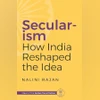
Book
Nilanjan Mukhopadhyay
5 min read Last Updated : Feb 15 2024 | 10:42 PM IST
Secularism: How India Reshaped the Idea
Author: Nalini Rajan
Publisher: Speaking Tiger
Pages: 171
Price: Rs 399

Secularism is a problematic word in India. Almost every political party or civil society group, whatever their political orientation, claims to be “secular” and committed to the “ism”. The author of this treatise fleshes out three definitions of the word from two dictionaries and one encyclopaedia and contends that all are “simplistic and misleading insofar as they imply that secularism is a single-value idea.” Instead, she postulates that “secularism is a far more complex, triple-value concept”.

Also Read


This is the third book in an intended series of 10 publications that analyses various core elements of India’s Constitution. Its launch coincided with the 75th anniversary of Independence, the intention being that publications like these would stand apart from the watershed event’s conversion into an “event” by the government.

We are now marking the same watershed anniversary of India becoming a republic in 1950, when the Constitution came into force. Over the years, various issues that made up the core ideas of what is also termed as “India’s only Holy Book”, are used mainly as clichés and rarely as motivating principles.

The first book in this series was written by eminent social scientist, Neera Chandhoke, who has also helped the series anchor Harsh Mander bring it out and was evocatively titled  We, the People, and Our Constitution .

What was the genesis of the idea of secularism in contemporary India’s constitutional discourse? India was for long periods of its history a multi-faith country, but where is the origin of the enshrinement of secularism as an idea in official texts? The first official document that referred to equality for all religions and various followers, the author says, was in the 1858 Proclamation of Queen Victoria promising equality for all religions and pledging state neutrality. This proclamation, the author writes “inaugurated a new British colonial policy of support for non-interference in matters of religious belief of worship within British India.”

This proclamation set the tone to ensure that in the Indian Constitution, all eight religions to which India is an on-paper home — Hinduism, Sikhism, Buddhism, Jain, Islam, Christianity, Zoroastrianism and Judaism — are not interfered with.

In today’s India, this non-interference is highlighted as evidence of weakness and imperfection. On February 10, speaking in the Lok Sabha during the hastily convened debate on the consecration of the Ram temple, Union Home Minister Amit Shah made a disquieting assertion: “There is not a single country in the world where the majority community fought such a long legal battle to practise their faith.” Implicit in this assertion is the contention that it is normal for a minority community to wage battles to practise their faith but this fate shall not be the majority community’s.

The author would not have been aware, given that the manuscript was completed before the January 22 event at Ayodhya, of how the day would pan out.  Although this episode has been in the news, the author reminds readers about the sharp divergence between PM Jawaharlal Nehru and President Rajendra Prasad over the inaugural ceremony of the Somnath Temple. Nehru then, unambiguously stated that “he strongly objected to public functionaries attending religious ceremonies.”

Eventually, India’s first president attended the ceremony in a private capacity. Nehru was committed to a “liberal, secular state that would focus on individual rights.” In contrast, PM Narendra Modi was the principal Jajman of the religious ritual. Thereafter, he addressed, as the Prime Minister, a select audience that ominously included several retired chiefs of the armed forces even as a military helicopter showered flower petals. 

Secularism cannot be understood without unpeeling the Constitution and comprehending that new sectarian interpretations of it are possible. The author points out that India’s formal charter “protects the right to propagate religion” but that in recent years a new discourse has been created to bring in notions of “inducements” and “fraud” pertaining to religious conversion.

With contentions like “the strength of a secular state lies in the way it treats its minorities”, this book goads readers to pose questions: To what extent is India secular today? Will India’s allegiance on paper to the idea of secularism be struck down by the judiciary in times to come? This question becomes important in the backdrop of the Supreme Court agreeing to hear a plea asserting that insertion of the two words through the 42nd Amendment, “Secularism” and “Socialism”, was against the law and should be deleted from the Preamble.

It is not just this amendment to the Constitution that has faced attack, but even the landmark judgment by the largest-ever 13-judge Bench in 1973, in what is popularly known as the Kesavananda  Bharati   case, has faced criticism. This judgment put a check on parliamentary sovereignty by stating that while “Parliament had wide powers, it did not have the power to destroy the basic structure of the fundamental rights by making it subservient to directive principles, which are non-justiciable.” This ruling has been questioned by the current regime.

Methodically, the author critically examines flawed and often contradictory SC judgments on issues that impinged secularism. This includes the 1962 verdict in the  Sardar Syedna Taher Saifuddin Saheb  vs  State of Bombay  when the Supreme Court used the word secularism for the first time. The sweep of judgments scrutinised is vast.

This book may be slim but packs an abundance of deeply researched information and insight that reinforces readers’ understanding of secularism. It is a useful tool while preparing to contest efforts to undermine the secular principles of the Constitution.

The reviewer is an NCR-based author and journalist.@NilanjanUdwin

One subscription. Two world-class reads.

Already subscribed? Log in

Subscribe to read the full story →
*Subscribe to Business Standard digital and get complimentary access to The New York Times

Smart Quarterly

₹900

3 Months

₹300/Month

SAVE 25%

Smart Essential

₹2,700

1 Year

₹225/Month

SAVE 46%
*Complimentary New York Times access for the 2nd year will be given after 12 months

Super Saver

₹3,900

2 Years

₹162/Month

Subscribe

Renews automatically, cancel anytime

Here’s what’s included in our digital subscription plans

Exclusive premium stories online

  • Over 30 premium stories daily, handpicked by our editors

Complimentary Access to The New York Times

  • News, Games, Cooking, Audio, Wirecutter & The Athletic

Business Standard Epaper

  • Digital replica of our daily newspaper — with options to read, save, and share

Curated Newsletters

  • Insights on markets, finance, politics, tech, and more delivered to your inbox

Market Analysis & Investment Insights

  • In-depth market analysis & insights with access to The Smart Investor

Archives

  • Repository of articles and publications dating back to 1997

Ad-free Reading

  • Uninterrupted reading experience with no advertisements

Seamless Access Across All Devices

  • Access Business Standard across devices — mobile, tablet, or PC, via web or app

Topics :BS ReadsBook readingBOOK REVIEWIndian constitutionsecularism

Next Story



