Budget: Govt must resist temptation to spend more, stick to fiscal path

Why it would be unwise to stray away from fiscal consolidation
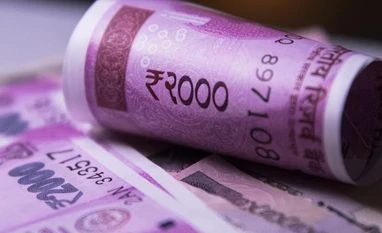
Cash, Demonetisation, Currency
.
Business Standard Editorial Comment New Delhi
Last Updated : Jan 31 2017 | 11:33 PM IST
When planning the Union Budget for 2017-18, the finance ministry will have its work cut out. It has many imponderables to confront. The impact of demonetisation is not captured by the Advance Estimates of national income, a fact that complicates the process of budgeting. The roll-out of the goods and services tax is planned for the coming financial year, which means that revenue during the year will exhibit an analytical discontinuity with what has gone before. And the removal of the distinction between Plan and non-Plan expenditure, while much needed, will confuse analysis of what spending counts as an investment and what does not. Under such circumstances, the finance ministry should seek to introduce certainty wherever it can. And certainty is most needed on the question of the fiscal consolidation path.

So far, this government has demonstrated an exemplary commitment to fiscal consolidation. It has, meanwhile, used the bonanza created by lower fuel prices, among other things, to ramp up Budget allocations to infrastructure. The hope is that such infrastructure spending will “crowd in” private investment — essentially, that government spending on productive infrastructure will create the conditions and sentiment needed for a revival of private infrastructure spending. In the context of lower than hoped for growth, and the demand shock of demonetisation, there might well be a temptation to continue with such thinking, even at the expense of missing fiscal targets for the coming year.

But it would be unwise to stray from the path of fiscal consolidation. For one, previous attempts at “crowding in” have not noticeably helped private investment, which has shrunk for three quarters. The macroeconomic situation might appear stable, but significant challenges remain. As Reserve Bank of India Governor Urjit Patel pointed out recently, the general government deficit — the borrowing of the Centre and the states, combined — is “amongst the highest in the group of G-20 countries”. The ratio of overall public debt to gross domestic product is too high for the comfort of the rating agencies, which seems to mean that India’s long-sought upgrade is being held in abeyance till the ratio comes down. An upgrade will significantly improve India’s ability to attract long-term finance from pools of patient capital, such as pension funds, in the West. That will serve as more of a boost to infrastructure than any additional spending the government can muster.

Nor should it be argued that additional spending to boost consumption is justified as a response to the shock of demonetisation. For one, the shock will begin to wear off just when any fiscal stimulus will begin to work — the timing of the problem and the solution will not match. Nor will a boost to demand from the Budget help the long-term structural change that demonetisation will, in the best-case scenario, help to usher in. That needs supply-side reforms to labour, land and capital, as it always has. So while the government might be tempted to claim exceptional circumstances and deviate from the chosen path of fiscal consolidation, it will be too dangerous a decision, for very little benefit. That path predicted a clear single number for the fiscal deficit-to-GDP ratio for 2017-18 — three per cent. The finance ministry must stick to it.


One subscription. Two world-class reads.

Already subscribed? Log in

Subscribe to read the full story →
*Subscribe to Business Standard digital and get complimentary access to The New York Times

Smart Quarterly

₹900

3 Months

₹300/Month

SAVE 25%

Smart Essential

₹2,700

1 Year

₹225/Month

SAVE 46%
*Complimentary New York Times access for the 2nd year will be given after 12 months

Super Saver

₹3,900

2 Years

₹162/Month

Subscribe

Renews automatically, cancel anytime

Here’s what’s included in our digital subscription plans

Exclusive premium stories online

  • Over 30 premium stories daily, handpicked by our editors

Complimentary Access to The New York Times

  • News, Games, Cooking, Audio, Wirecutter & The Athletic

Business Standard Epaper

  • Digital replica of our daily newspaper — with options to read, save, and share

Curated Newsletters

  • Insights on markets, finance, politics, tech, and more delivered to your inbox

Market Analysis & Investment Insights

  • In-depth market analysis & insights with access to The Smart Investor

Archives

  • Repository of articles and publications dating back to 1997

Ad-free Reading

  • Uninterrupted reading experience with no advertisements

Seamless Access Across All Devices

  • Access Business Standard across devices — mobile, tablet, or PC, via web or app

Next Story



