India has increasingly become an important player as a bilateral creditor, with special focus on its immediate neighbourhood, according to the latest International Debt Report released by the World Bank.
In comparison, China, which continues to dominate as one of the largest bilateral creditors, has a diverse lending strategy with a focus on the African continent.
Aiming to become the leader of the Global South, India in recent years has also started to follow a diversification strategy and expand its presence in Africa with development finance assistance to countries like Malawi, Mozambique, Ghana, and others.
Escalating debt vulnerabilities in many low or middle-income countries (LMICs) and overlapping crises—such as the Covid-19 pandemic, the war in Ukraine, devastating climate events, and the daunting global macroeconomic environment—are forcing an increasing number of countries to seek debt restructuring from external creditors.
This has brought both China and India to the negotiating table, often with contrasting views on debt restructuring, as seen in the cases of Zambia and Sri Lanka.


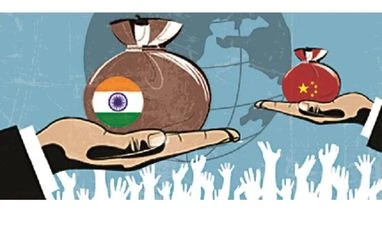 "India, China follow contrasting external lending strategies: World Bank")









