Associate Sponsors

Co-sponsor

Lords committee flags risks for UK industries in India free trade agreement

UK parliamentary panel backs the India-UK FTA as historic but warns British firms may face delayed gains, sectoral risks and tougher competition from Indian exports
India UK FTA
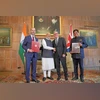
The India-UK Comprehensive Economic and Trade Agreement (CETA) was signed in July 2025. The deal will take some time to implement since the UK will need the approval of its Parliament. (Photo: Reuters)
Shreya Nandi New Delhi
4 min read Last Updated : Feb 03 2026 | 5:31 AM IST
The recently signed India-UK free trade agreement (FTA) is a “historic achievement” providing geopolitical stability and tariff reductions, but while Indian exporters will gain immediate market access, benefits to their British counterparts will materialise only gradually, according to an International Agreements Committee report.
 
In its report, the committee appointed by the House of Lords – the second chamber of the UK Parliament – flagged concerns and shortcomings agreed upon in the deal. They included sector-specific concerns, delay in conclusion of a bilateral investment treaty (BIT), omission of legal services in the deal as well as lack of commitment to free cross-border data flows. That apart, the panel noted that the agreement is “heavily goods-focused” and it offers limited new services access.
 
There are also concerns that the UK could be flooded with high volumes of Indian exports that were previously destined for the US. The fear is such exports could be redirected to the UK due to the 50 per cent tariff imposed by Washington on several Indian exports in August 2025.
 
The India-UK Comprehensive Economic and Trade Agreement (CETA) was signed in July 2025. The deal will take some time to implement since the UK will need the approval of its Parliament.
 
The report raised concerns that UK industries, such as dairy, will be exposed to additional competition without the benefits of improved access to a new market. India didn’t give market access to dairy, considering its sensitivities. It also flagged India’s use of non-tariff barriers, including the unilateral imposition of Quality Control Orders (QCOs), which could undermine the objectives of the agreement and exacerbate asymmetries in market access. However, it also noted that some of these orders have been revoked.
 
To address these concerns, the committee has urged the British government to clarify the measures it is taking to support industries that may be affected, and publish an “impact assessment” of cumulative impact of trade deals on the UK’s agriculture sector.
 
“We call on the government to monitor the risk of trade displacement of both Indian products diverted from the US to the UK, and of other developing countries’ exports to the UK. Finally, we call upon the government to not hesitate to engage with India to address any ongoing barriers to trade,” it said.
 
“We must highlight that in order to get the Agreement over the line, a number of notable UK interests were omitted. For example, legal services were omitted entirely from the text, which we consider a missed opportunity. The government did not succeed in concluding a bilateral investment treaty,” said Lord Goldsmith, chair of the House of Lords International Agreements Committee.
 
“There is considerable scope for further developing the provisions for services trade and investment facilitation, and the government should continue to engage with India on these issues. It also remains to be seen how competitive UK products will remain as India opens its market more broadly, particularly in the context of its very recently signed FTA with the EU,” Goldsmith said.
 
Once the deal kicks in, India will benefit from the duty elimination of tariffs on approximately 99 per cent of tariff lines, covering nearly 100 per cent of the trade value. On the other hand, Indian tariffs will be slashed, locking in reductions on 90 per cent of tariff lines, with 85 per cent of these becoming fully tariff-free within a decade.
 
When the deal comes into force, UK clothing and textiles manufacturing may face intense competition that could “shrink the UK industry”, according to the report, citing academic and industry experts. Modelling suggests Indian exports to the UK in this sector could jump by 1,573 per cent, potentially threatening jobs in regions like Yorkshire and Lancashire.

One subscription. Two world-class reads.

Already subscribed? Log in

Subscribe to read the full story →
*Subscribe to Business Standard digital and get complimentary access to The New York Times

Smart Quarterly

₹900

3 Months

₹300/Month

SAVE 25%

Smart Essential

₹2,700

1 Year

₹225/Month

SAVE 46%
*Complimentary New York Times access for the 2nd year will be given after 12 months

Super Saver

₹3,900

2 Years

₹162/Month

Subscribe

Renews automatically, cancel anytime

Here’s what’s included in our digital subscription plans

Exclusive premium stories online

  • Over 30 premium stories daily, handpicked by our editors

Complimentary Access to The New York Times

  • News, Games, Cooking, Audio, Wirecutter & The Athletic

Business Standard Epaper

  • Digital replica of our daily newspaper — with options to read, save, and share

Curated Newsletters

  • Insights on markets, finance, politics, tech, and more delivered to your inbox

Market Analysis & Investment Insights

  • In-depth market analysis & insights with access to The Smart Investor

Archives

  • Repository of articles and publications dating back to 1997

Ad-free Reading

  • Uninterrupted reading experience with no advertisements

Seamless Access Across All Devices

  • Access Business Standard across devices — mobile, tablet, or PC, via web or app

Topics :India UKFTAeconomyTrade deals

Next Story


