
AI-operated fighter jet to fly US Air Force secy in test of drone warplanes
The service has been tight-lipped on what the fleet of drones will look like in size or platform, whether they will be full-size warplanes or something smaller
 "AI-operated fighter jet to fly US Air Force secy in test of drone warplanes")
Explore Business Standard

Associate Sponsors
Co-sponsor
The service has been tight-lipped on what the fleet of drones will look like in size or platform, whether they will be full-size warplanes or something smaller
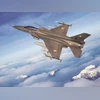
The Air Force is betting a large part of its future air warfare on a fleet more than 1,000 autonomously operated drones, and later this spring its top civilian leader plans to climb into one of those artificial intelligence-operated warplanes and let it take him airborne.
Air Force Secretary Frank Kendall told senators on Tuesday at a hearing on the service's 2025 budget that he will enter the cockpit of one of the F-16s that the service has converted for drone flight to see for himself how it performs in the air.
There will be a pilot with me who will just be watching, as I will be, as the autonomous technology works, Kendall told the Senate Appropriations Committee defense panel members. Hopefully neither he or I will be needed to fly the airplane.
Drone warfare has quickly expanded from the sidelines of combat to one of its primary weapons. Drones are a daily threat in Ukraine and in the Middle East. In Ukraine, everyday citizens are targeted by Russian drones but also are assembling drones to collect video of Russian positions. In the Middle East, Iranian-backed Houthis and militant groups have regularly employed sophisticated air, sea and underwater drones to target U.S. bases and commercial ships in the Red Sea.
The Air Force began planning for its fleet of collaborative combat aircraft, or CCAs, several years ago, and it envisions a scenario in which one piloted jet will be able to quarterback multiple AI-driven, responsive drones, which the service calls "loyal wingmen."
The service has been tight-lipped on what the fleet of drones will look like in size or platform, whether they will be full-size warplanes or something smaller. Kendall said the converted F-16 test flight will be done for him to observe the technology behind the future fleet.
The fleet is being designed specifically with future warfare, and potentially a conflict with China, in mind. China has rapidly modernized its anti-access capabilities as more sophisticated air defense systems make it risky to send manned crews too close. Drone aircraft could augment the service's ability to breach those defenses, and they are envisioned to provide support in a variety of future missions such as surveillance or jamming.
The initial role for the aircraft was going to be counter-air, but it will have the potential to do other things, Kendall said.
The drone fleet is also expected to be cheaper than developing new manned jets, Kendall said. The current goal is to have each cost about a quarter to a third of what an F-35 fighter costs now, or about $20 million apiece.
(Only the headline and picture of this report may have been reworked by the Business Standard staff; the rest of the content is auto-generated from a syndicated feed.)
First Published: Apr 09 2024 | 11:33 PM IST

