
Citing leadership in Global South, Bhutan PM backs India's UNSC bid
Tshering said that Bhutan has been a vocal advocate for reforming the UNSC, pushing for a more representative and effective body
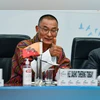 "Citing leadership in Global South, Bhutan PM backs India's UNSC bid")
Explore Business Standard

Associate Sponsors
Co-sponsor
Tshering said that Bhutan has been a vocal advocate for reforming the UNSC, pushing for a more representative and effective body
Bhutan Prime Minister Tshering Tobgay voiced support for India's bid for a permanent seat on the United Nations Security Council (UNSC), citing the country's significant economic growth and leadership in the Global South.
The remarks by Bhutan's Prime Minister came while he addressed the 79th session of the United Nations General Assembly on Friday.
Tshering said that Bhutan has been a vocal advocate for reforming the UNSC, pushing for a more representative and effective body. He said, "The United Nations must evolve to meet the realities of today's world. The Security Council, as it stands, is a relic of the past. We need a Council that reflects the current geopolitical and economic landscape. Bhutan has long advocated for the reform of the Security Council to make it more representative and effective."
He added, "For this, India, with its significant economic growth and leadership in the Global South, deserves a permanent seat at the Security Council. Similarly, Japan, a leading donor and peacebuilder, warrants permanent membership."
Tshering also expressed his gratitude towards India for its support throughout Bhutan's development journey. "India I would like to reserve our deepest thanks for India, our closest friend and neighbour. They have been with us from the very beginning of our development journey, and have remained steadfast in their support and friendship," Tshering said.
Notably, India has long sought a permanent seat in the Security Council to better represent the interests of the developing world. The nation's quest has gained momentum with support from the international community.
The UNSC is composed of 15 member states, including five permanent members with veto power and ten non-permanent members elected for two-year terms.
The five permanent members of the UNSC include China, the United Kingdom, France, Russia, and the United States. The non-permanent members of the United Nations Security Council are elected for 2-year terms by the UNGA.
A day before, French President Emmanuel Macron voiced France's support for India's inclusion as a permanent member of the UNSC.
Macron had said, "As long as we have a Security Council that is blocked reciprocally, I would say, according to each one's respective interests, it will be difficult to move forward. Is there a better system, I don't think so."
The French President also emphasised the need for reform within the UN, stressing that making the organisation more representative is the crucial step towards greater effectiveness. "So let's simply make the UN more effective, first and foremost by making it more representative. That's why France, and I will say it again here, supports the expansion of the Security Council. Germany, Japan, India, and Brazil should be permanent members, along with the two countries designated by Africa to represent it," he had said.
(Only the headline and picture of this report may have been reworked by the Business Standard staff; the rest of the content is auto-generated from a syndicated feed.)
First Published: Sep 28 2024 | 7:01 AM IST

