
Wang, Doval agree to work for improvement of ties: Chinese Foreign Ministry
Both Doval and Wang are the Special Representatives for the India-China border talks mechanism
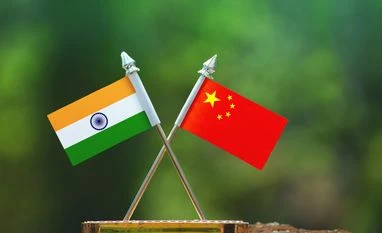 "Wang, Doval agree to work for improvement of ties: Chinese Foreign Ministry")
Explore Business Standard

Associate Sponsors
Co-sponsor
Both Doval and Wang are the Special Representatives for the India-China border talks mechanism
Chinese Foreign Minister Wang Yi and National Security Advisor Ajit Doval have agreed to work together to create conditions for the improvement of bilateral relations during their meeting in Russia, the Foreign Ministry here said on Friday.
During their talks on the sidelines of a meeting in St Petersburg of the BRICS high-ranking officials responsible for security matters, Wang and Doval discussed the progress made in the recent consultations on border issues, the Chinese Foreign Ministry said in a press release.
Both Doval and Wang are the Special Representatives for the India-China border talks mechanism.
Both parties expressed the belief that the stability of the China-India relations is in the fundamental and long-term interests of the two peoples and conducive to regional peace and development.
China and India agreed to implement the consensus reached by the heads of the two countries, enhance mutual understanding and trust, maintain continuous communication, and create conditions for boosting bilateral ties, it said.
Wang, also a member of the Political Bureau of the Communist Party of China Central Committee, stressed that facing a turbulent world, China and India as two ancient eastern civilisations and emerging developing countries should adhere to independence, choose unity and cooperation, and avoid consuming each other, state-run Xinhua news agency reported.
Wang expressed the hope that the two sides will properly handle their differences in a pragmatic approach and find the right way to get along with each other and push the China-India relations back on track for healthy, stable, and sustainable development.
A press release on the talks issued by the Ministry of External Affairs (MEA) said India and China on Thursday agreed to work with "urgency" and "redouble" their efforts to achieve complete disengagement in the remaining friction points in eastern Ladakh.
In the meeting, Doval conveyed to Wang that peace and tranquillity in border areas and respect for the Line of Actual Control (LAC) are essential for the return of normalcy in bilateral ties, the MEA press release said.
The Doval-Wang meeting took place on the sidelines of a conclave of national security advisors of the BRICS (Brazil-Russia-India-China-South Africa) nations.
The MEA said the meeting between Doval and Wang provided an opportunity to review the recent efforts towards finding an early resolution of the outstanding issues.
The MEA said the two sides agreed that the India-China bilateral relationship is significant not just for the two countries but also for the region and the world.
The Doval-Wang meeting came two weeks after India and China held diplomatic talks during which they agreed to intensify contacts through diplomatic and military channels to find a resolution to the outstanding issues.
Hours before the talks between Doval and Wang, External Affairs Minister S Jaishankar said in Geneva that roughly 75 per cent of the "disengagement problems" with China are sorted out but the bigger issue has been the increasing militarisation of the frontier.
The Indian and Chinese militaries have been locked in a standoff since May 2020 and a full resolution of the border row has not yet been achieved though the two sides have disengaged from a number of friction points.
The ties between the two countries nosedived significantly following the fierce clash in the Galwan Valley in June 2020 that marked the most serious military conflict between the two sides in decades.
India has been maintaining that its ties with China cannot be normal unless there is peace in the border areas.
The two sides have so far held 21 rounds of Corps Commander-level talks to resolve the standoff.
(Only the headline and picture of this report may have been reworked by the Business Standard staff; the rest of the content is auto-generated from a syndicated feed.)
First Published: Sep 13 2024 | 11:33 AM IST

