
War with Israel to continue for proper cease-fire terms: Hezbollah's Kassem
More than 2,790 people have been killed and 12,700 wounded in Lebanon since Oct. 8, 2023, when Hezbollah began firing rockets into Israel
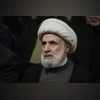 "War with Israel to continue for proper cease-fire terms: Hezbollah's Kassem")
WebinarsNew
Deep DiveNew
Explore Business Standard
More than 2,790 people have been killed and 12,700 wounded in Lebanon since Oct. 8, 2023, when Hezbollah began firing rockets into Israel
Hezbollah's newly named leader Naim Kassem said in his first public comments aired Wednesday that the militant group will keep fighting in its ongoing war with Israel until it is offered cease-fire terms it deems acceptable.
If the Israelis decide to stop the aggression, we say that we accept, but according to the conditions that we see as suitable, Kassem said, speaking from an undisclosed location in a pre-recorded televised address. We will not beg for a ceasefire as we will continue (fighting)... no matter how long it takes.
The speech came as international mediators have launched a new push for negotiated cease-fires in Lebanon and Gaza.
More than 2,790 people have been killed and 12,700 wounded in Lebanon since October 8, 2023, when Hezbollah began firing rockets into Israel, according to Lebanon's Health Ministry. The conflict escalated sharply last month and Israeli ground forces invaded southern Lebanon at the beginning of October. Some 1.2 million people have been displaced by the conflict in Lebanon according to government estimates.
In Israel, rockets, missiles, and drones launched by Hezbollah have killed at least 63 people, about half of them soldiers. More than 60,000 Israelis from towns and cities along the border have been evacuated from their homes for more than a year.
Kassem, a cleric and founding member of the Lebanese militant group, was named Tuesday to replace former longtime leader Hassan Nasrallah, who was killed in an Israeli airstrike on a Beirut suburb in late September. Kassem had served as Nasrallah's deputy for more than three decades.
Several other high-ranking officials with the group, including Nasrallah's presumptive successor, Hashem Safieddine, have also been killed in recent weeks, as the Israel-Hezbollah war has escalated in Lebanon.
Kassem said the series of blows dealt to the group in recent weeks - including pager and walkie-talkie explosions that targeted Hezbollah members in mid-September and the assassination of Nasrallah - had hurt the group, but he asserted that the group had been able to reorganize its ranks within eight days after Nasrallah's death.
Hezbollah's capabilities are still available and compatible with a long war, he said. He pointed to the steady stream of Israeli soldiers wounded and killed in southern Lebanon since Israeli forces launched a ground invasion on Octoberr 1, and to a drone launched by Hezbollah that hit the home of Israeli Prime Minister Benjamin Netanyahu earlier this month. Netanyahu was not harmed.
He said Hezbollah has been in coordination with Lebanese Parliament Speaker Nabih Berri, the primary Lebanese interlocutor communicating with the United States, which has put forward a series of proposals to end the conflict.
So far no project has been put forward that Israel agrees on and is acceptable for us to negotiate it, Kassem said.
Kassem said Hezbollah is carrying out plans laid out by its slain former chief in the ongoing war.
There was no immediate Israeli response to the speech, though several Israeli leaders have hinted that Kassem is Israel's next high-level assassination target. On Tuesday, Defense Minister Yoav Gallant tweeted a picture of Kassem with the words Temporary appointment. Not for long. Foreign Minister Israel Katz said Israel would ensure that Kassem follows in Nasrallah's footsteps.
As Kassem was speaking, a series of Israeli airstrikes pounded the eastern city of Baalbek.
The Israeli army had earlier issued an evacuation warning for residents in the entire eastern Lebanese city of Baalbek, including the ancient Roman temple complex, inscribed as a UNESCO World Heritage site.
The order also included surrounding areas and key routes in the Bekaa Valley.
The army said they were targeting fuel depots to halt the movement of weapons and artillery from Iran, without providing evidence of such activity. US State Department spokesperson Matthew Miller said Israel has a responsibility to protect civilian infrastructure and cultural heritage sites.
On October 6, an Israeli strike hit some 700 meters (750 yards) away from the ancient citadel, which houses two of the largest Roman temples in the world.
First Published: Oct 30 2024 | 9:30 PM IST

