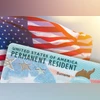
Immigration has become a central focus of the Donald Trump administration, and scrutiny is no longer limited to undocumented migrants. Legal immigrants, including Green Card holders, are also facing tighter checks and new restrictions under evolving policy changes.
Against this backdrop, immigration attorney Sekou Clarke, in a recent video, outlined few major developments affecting Green Card holders in the United States. Several of these measures are already in force, while others are expected to take effect soon.
He said Green Card holders could lose access to Small Business Administration (SBA) loans from March 1 if they own any share in the applying business, as firms must now be fully owned by US citizens.
Clarke also warned of stricter background checks during Green Card renewals and citizenship filings, alongside mandatory biometric entry-exit tracking since December 2025 to monitor travel and residence patterns.
He added that some refugees without permanent residency after a year in the US could face detention, while conditional Green Card holders may see surprise home or workplace visits to verify eligibility.
Key takeaways
1. Green Card holders may lose SBA loan eligibility from March 1 if they hold any ownership stake
2. Background checks during renewals and citizenship filings are becoming more rigorous
3.Biometric entry-exit tracking for permanent residents began in December 2025
4. Some refugees without permanent residency after one year may face detention
5. Conditional Green Card holders could receive surprise verification visits
6. Proposed prevailing wage changes may raise costs for H-1B and Green Card sponsorship
Here is a closer look at the changes affecting Green Card holders.
What changes from March 1 on SBA loans?
Green Card holders will not qualify for Small Business Administration loans if they are part owners of the business seeking the loan. To be eligible, every direct and indirect owner must now be a US citizen.
This change prevents Green Card holders from holding any ownership stake in a business applying for SBA funding. Many permanent residents operate small enterprises in the US, which contribute meaningfully to the economy, according to experts.
“Legal permanent residents (LPRs), commonly referred to as green card holders, who relied on the money to invest in the business will be the hardest hit by the new SBA rule. Minority shareholders, family-run firms, or immigrant-founded startups are particularly exposed,” said Charles Kuck, an Atlanta-based immigration attorney, responding to queries from Business Standard.
He added that even a non-controlling stake could now create problems. “The ridiculous rules will also mean that a small, non-controlling ownership stake held by a green card holder will apparently make a business ineligible for SBA-backed loans,” Kuck said.
Why are background checks becoming stricter?
Sekou Clarke said that although Green Card holders are lawful permanent residents and many are on the path to citizenship, authorities are carrying out deeper background checks when they apply for renewal or naturalisation.
Officials are reviewing cases for fraud, arrests and whether applicants were eligible for permanent residence in the first place.
Last year, the Trump administration announced plans to expand the civics test used in naturalisation interviews, requiring applicants to demonstrate greater knowledge of US history and government. Background reviews are also being broadened, according to usajobs.gov.
USCIS officers have been instructed to assess applicants’ “good moral character”. This review can include looking at positive contributions in workplaces or communities, not just the absence of criminal records.
What does mandatory biometric entry-exit mean?
A rule that came into force in December 2025 makes biometric checks mandatory for all non-US citizens, including Green Card holders, when they leave and re-enter the country.
The administration is closely tracking travel patterns. Permanent residents are generally expected to maintain continuous residence in the US, and prolonged stays abroad can raise questions about residency status.
Which refugees could face detention?
Under a new policy released this month, some refugees may face detention if they have lived in the US for at least one year but have not yet obtained lawful permanent residency.
Refugee status already involves extensive security screening. Under the updated approach, individuals may face additional review and possible detention if they do not move forward in the status adjustment process within expected timelines.
Will conditional Green Card holders face surprise checks?
Conditional Green Card holders may receive unannounced visits from officials at their home or workplace, Clarke said.
Conditional permanent residence is granted for a limited period, often in marriage-based cases where applicants must later prove the relationship is genuine.
Officials are carrying out extra verification to confirm that applicants continue to meet the conditions, including whether they remain married to the same spouse and live at the declared address.
How could wage rule changes affect Green Card sponsorship?
The United States has moved closer to revising wage rules governing H-1B visas and employment-based Green Card sponsorship, a shift that could affect Indian professionals planning to work in America.
A proposed regulation from the Department of Labor has cleared review at the Office of Management and Budget, the final administrative step before publication for public comment. The full regulatory text is yet to be released, but immigration experts expect tighter prevailing wage benchmarks.
Prevailing wages set the minimum salary US employers must pay foreign workers based on occupation and location. Any increase raises the cost of sponsorship under both the H-1B programme and the Green Card PERM process.
For Indian professionals, who account for a large share of H-1B approvals, even modest wage revisions can influence employer hiring decisions.

 "Green Card holders: 6 new US rules tighten checks and benefits access")


 Connect with us on WhatsApp