What ails the electric vehicle minnows? Branding, cost competitiveness

A quiet EV revolution is both promising, and pensive
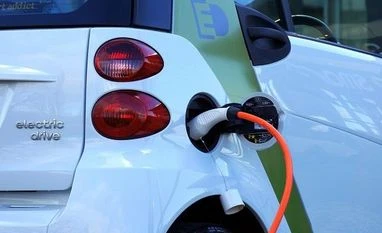
electric vehicle
Representative Image
Nitin Kumar New Delhi
4 min read Last Updated : Sep 21 2023 | 10:26 PM IST
At an industry event in New Delhi earlier this month, Union Minister of Road Transport and Highways Nitin Gadkari proudly highlighted the flourishing electric vehicle (EV) manufacturing industry in India. He emphasised the significant role played by more than 600 startups in achieving the impressive milestone of selling 3 million EVs to date and expressed his optimism that annual sales would exceed 10 million by 2030.

A quiet EV revolution brimming in the country is laudable, but the story behind the numbers is not that promising. An analysis by Business Standard uncovered that of the 640 companies involved in manufacturing electric vehicles (EVs) in the country, a significant portion, precisely 345 players (constituting 53 per cent), reported sales of fewer than 100 units each.
 
In contrast, the top 20 players accounted for a substantial 70 per cent share of the total sales of 1 million vehicles since January 2023, according to data available on the VAHAN dashboard of the Ministry of Road Transport and Highways.
 
So many three-wheelers but nowhere to go

The electric three-wheeler (e3W) category, comprising 460 players, or 76 per cent of the total 640 manufacturers in the industry, faces the most significant challenge.
 
This segment not only boasts the highest number of manufacturers but also has the largest share of players who sell fewer than 100 units. In total, 236 players sold fewer than 100 units.
 
Since e3Ws are primarily purchased by the low-income segment of society and prioritise cost against brand name, there is relatively less consolidation in sales among the top 10 players. These top 10 e3W manufacturers accounted for only 38 per cent of the total 388,043 e3W units sold.
 
However, as the internal combustion engine (ICE) 3W manufacturers are ramping up their EV business, the space for new players is likely to shrink. Mahindra & Mahindra (M&M) and Piaggio, both traditional players in the ICE industry, are already among the top 10 manufacturers, collectively holding an 11 per cent market share. M&M is already the market leader in the segment. “Maintaining quality, innovation, and cost competitiveness will be key factors for EV startups’ long-term sustainability,” said Nitin Kapoor, managing director, Saera Electric Auto, which has a decade’s experience in manufacturing e3Ws. Saera Electric Auto is also India’s third-largest e3W seller. 
 
Taking on the behemoths
 
Like the e3W category, the electric two-wheeler (e2W) startups are also starting to face challenges from the traditional ICE players. Within the top 10 players, TVS Motor Company and Bajaj Auto have already secured a significant 25 per cent share of the total 588,957 e2Ws sold since January.
 
Despite this, startups like Ola Electric, Ather Energy, Ampere Vehicles, and Okinawa Autotech are among the segment leaders. However, their future depends on cost competitiveness, quality, and after-sales services, experts say.
 
“As e2W and electric passenger cars (ePVs) are considered premium and their customers are aspirational, new entrants have to invest in product quality and branding to survive as the segment has a high level of consolidation,” said Preetesh Singh, specialist CASE and alternate powertrains, NRI Consulting & Solutions. 
 
In the e2W market, the top 10 players contribute 90 percent of the total e2W sales. Of the 159 manufacturers producing e2Ws in the country, 100 of them have sold fewer than 100 units.
 
“Startups who will not focus on after-sales services and do not bring innovation will fail,” said Atul Gupta, co-founder and director of e-Sprinto, an EV startup, which sells fewer than 100 vehicles.
 
The ePV segment is completely dominated by the major manufacturing companies or their subsidiaries. Tata Motors contributed 72 per cent to the overall sales figure. High upfront investment, capital requirements, supply-chain challenges, and technical challenges deter new entrants from joining the market.

Although industry experts see demand for EVs growing due to environmental concerns, government support, and cheap imported raw materials, they stress that small-scale participants must prioritise long-term planning to adhere to stringent government regulations, compete with established manufacturers of ICE vehicles, and ensure the security of their supply chains to thrive.

Some EV startups in India do have the potential to endure in the face of intensifying competition and stricter regulations for localisation and battery safety norms, but the majority of them will exit the market, said an industry expert.

“In the long run, the Indian EV market is expected to consolidate with the number of players reducing significantly,” added Singh.


One subscription. Two world-class reads.

Already subscribed? Log in

Subscribe to read the full story →
*Subscribe to Business Standard digital and get complimentary access to The New York Times

Smart Quarterly

₹900

3 Months

₹300/Month

SAVE 25%

Smart Essential

₹2,700

1 Year

₹225/Month

SAVE 46%
*Complimentary New York Times access for the 2nd year will be given after 12 months

Super Saver

₹3,900

2 Years

₹162/Month

Subscribe

Renews automatically, cancel anytime

Here’s what’s included in our digital subscription plans

Exclusive premium stories online

  • Over 30 premium stories daily, handpicked by our editors

Complimentary Access to The New York Times

  • News, Games, Cooking, Audio, Wirecutter & The Athletic

Business Standard Epaper

  • Digital replica of our daily newspaper — with options to read, save, and share

Curated Newsletters

  • Insights on markets, finance, politics, tech, and more delivered to your inbox

Market Analysis & Investment Insights

  • In-depth market analysis & insights with access to The Smart Investor

Archives

  • Repository of articles and publications dating back to 1997

Ad-free Reading

  • Uninterrupted reading experience with no advertisements

Seamless Access Across All Devices

  • Access Business Standard across devices — mobile, tablet, or PC, via web or app

Topics :Nitin GadkariMinistry of Road Transport and HighwaysElectric vehicles sales

Next Story



