
EV adoption even more relevant after West Asia crisis: PM's Advisor
The country also needs to focus on localisation and reduce imports from China for critical parts while pushing for electric mobility, Kapoor said
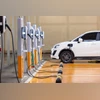 "EV adoption even more relevant after West Asia crisis: PM's Advisor")
WebinarsNew
Deep DiveNew
Explore Business Standard
The country also needs to focus on localisation and reduce imports from China for critical parts while pushing for electric mobility, Kapoor said
Adoption of electric mobility has become the most essential task for India as the West Asia crisis has shown how vulnerable the country is to external forces as far as energy is concerned, Tarun Kapoor, Advisor to the Prime Minister of India, said on Thursday.
The country also needs to focus on localisation and reduce imports from China for critical parts while pushing for electric mobility, Kapoor said while addressing a conference on 'Building India an electric mobility hub for Viksit Bharat' organised by industry body Assocham.
The topic has "become even more relevant after the West Asia crisis. Probably, I would say that for our country now getting into electric mobility has become the most essential task, which we all collectively have to accomplish," he noted.
He said if India's crude oil imports dropped, it would give a lot more strength to the economy and help the rupee to appreciate.
Reflecting on how the share markets behave during the crisis, Kapoor said, "We have become so vulnerable to the external forces as far as energy is concerned, which really is something we all have to think about. So now it has become like a mission for all of us." Acknowledging that it's not possible to reduce usage of petroleum to zero, he said, "... at least some control, some reduction would certainly help. Even a 5 per cent reduction would make a huge difference, and this can happen only if you move towards electric mobility really fast." Stating that India has gradually adopted electric mobility, he said two- and three-wheeler segments have seen a lot of traction but "in four-wheelers we still have a long way to go".
"The largest segment for us, as far as petrol is concerned, 60 per cent petrol is used by two-wheelers. Therefore getting (electric mobility) into two-wheelers very fast, bringing about that transition is important," Kapoor said, adding the recently announced Delhi EV policy is a step in the right direction.
Stressing the need for self-reliance while adopting electric mobility, he said, "We have to see how our dependence on China goes down...".
While noting that it is not possible to completely do away with imports in India, he said at least in critical components and minerals, India needs to have domestic production so that the industry does not suffer when China restricts exports of those items again.
He assured the government's support to the industry in order to achieve the goals of self sufficiency.
Asserting on the need for accelerating adoption of EVs, Kapoor said from the government's perspective "it is going to be a very fast targeted approach for us".
"We have to set very strong targets, and we have to achieve them... it has to be several times the current capacities and several times the current production," Kapoor said, while also asking the industry to scale up investments in the sector.
"Within the next five years, we should see that on the roads the visibility of electric vehicles becomes so significant that the world notices that at least in India something great has happened," Kapoor said.
(Only the headline and picture of this report may have been reworked by the Business Standard staff; the rest of the content is auto-generated from a syndicated feed.)
First Published: Jul 02 2026 | 1:22 PM IST


 Connect with us on WhatsApp