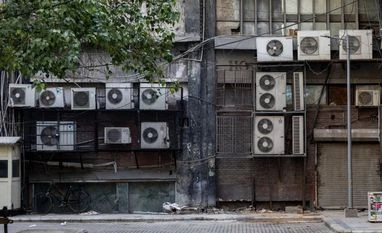
Last year, more than 14 million units of air conditioners (AC) were sold in India. While it will provide comfort to millions of Indian households during scorching summers, it comes at the expense of the environment.
Air conditioner purchases are expected to increase ninefold in the coming years, according to an AFP report citing residential ownership forecasts by mid-century.
Increasing comfort, declining environment
Undoubtedly, ACs have become essential during summer, especially in cities like Delhi, where temperatures can soar to 50 degrees Celsius. Considering rising temperatures, the use of ACs is seen as a basic necessity by those who can afford it.
However, this comfort is being met at the expense of larger harm to the environment. The refrigerants inside AC units and the coal-generated electricity that is required to power them contribute heavily to global warming. The widespread use of ACs also increases the outdoor temperatures by expelling indoor heat.
According to the World Health Organisation's Health in the Green Economy report, the heat expelled by air conditioning units can raise urban temperatures by at least one degree Celsius.
More ACs means more electricity
More air conditioners will also increase the demand for electricity, most of which comes from burning coal — a major source of climate pollution.
According to the AFP report, India is the world’s fastest-growing market for air conditioners, even though only about 7 per cent of homes currently have one.
With a population of 1.4 billion, India is already the third-largest emitter of greenhouse gases. In 2024-25, India surpassed the one billion tonne mark in coal production.
According to the India Meteorological Department, 2024 was the country’s hottest year since detailed records began in 1901, following a global trend of extreme heat fuelled by climate change. In May 2024, a heatwave in New Delhi sent temperatures soaring to 49.2 degrees Celsius — the same as the city’s record high in 2022.
By 2050, air conditioning is expected to cause a quarter of India’s carbon emissions and nearly half of its peak electricity demand, according to the UN Environment Programme’s Cool Coalition.

 "India bought 14 mn ACs in 2024: Cooling boom adds to environmental burden")


 Connect with us on WhatsApp