Over two years on, Kuno's cheetahs still play a losing Hunger Game

Vanishing prey and fierce competition from leopards keep cheetahs on edge
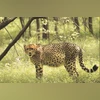
Cheetah Kuno
Deepak PatelPuja Das New Delhi
6 min read Last Updated : Mar 02 2025 | 11:36 PM IST

Don't want to miss the best from Business Standard?

More than two years after cheetahs were reintroduced in India, a scarcity of prey and fierce competition from leopards for the same food sources remain major concerns for senior officials monitoring the cheetahs’ survival and well-being, Business Standard has learnt. Declared extinct in India in 1952, cheetahs were reintroduced at Kuno National Park in Madhya Pradesh with the translocation of eight from Namibia on September 17, 2022, followed by 12 from South Africa on February 18, 2023.  Currently, there are 26 cheetahs in the national park after 10 died since their reintroduction in India, according to government sources. 
“Prey augmentation with antelopes needs to be explored on a priority basis both in Kuno and Gandhi Sagar Wildlife Sanctuary... Limiting factors in the context of prey revival in Kuno need to be identified,” observed the summary record of the 10th meeting of the Cheetah Project Steering Committee (CPSC), held on August 23 last year. 
During the meeting, it was noted that Kuno’s old sanctuary area — spanning 350 square (sq.) kilometre (km) — serves as a stronghold for spotted deer, with a density of 17.5 animals per sq. km. In contrast, the rest of the protected area, covering 400 sq. km, has a much lower deer density of just 1.5 per sq. km. 
This is not the first time the CPSC, established in May 2023, has raised concerns about the low prey density for cheetahs. In fact, in its very first meeting on May 30, 2023, the committee concluded that the “augmentation of natural prey is required in an ongoing manner”. 
When Business Standard asked CPSC Chairman Rajesh Gopal about the steps taken in the last six months to address the issue of insufficient prey for cheetahs, he said multiple actions are ongoing. These include actively increasing the prey population by translocating animals to Kuno and implementing “in-situ revival” — a process that involves creating protected enclosures where species like deer can breed and multiply without immediate threats from predators. He also noted that the released cheetahs are regularly making natural kills, suggesting that the situation is improving. 
Last October, the government announced that cheetahs would also be introduced into an in-situ enclosure at Gandhi Sagar. However, they have not been released yet, as the enclosure is still being prepared. The plan is to get 20 sub-adult cheetahs from Kenya and South Africa. All necessary approvals have been given, and authorities are in the process of arranging funds, augmenting the prey base, and ensuring proper accommodation. Once these aspects are taken care of, India is expected to bring them in by March, a government official said last December. 
India sources cheetahs from Namibia, Somalia, South Africa, Sudan, and Tanzania. 
The National Tiger Conservation Authority, the Ministry of Environment, Forest and Climate Change (MoEFCC), and the Madhya Pradesh government did not respond to queries sent by Business Standard on February 26 regarding this matter. 
The CPSC has convened 12 times so far, including the latest meeting on February 19. Business Standard has reviewed the summaries of the first 11 meetings. Government sources told the newspaper that the issue of prey shortage was also discussed at the recent February 19 meeting. 
Since the CPSC’s inception in May 2023, concerns about insufficient prey for cheetahs in Kuno have surfaced repeatedly in its meetings, as officials and experts grapple with the challenge of ensuring a stable ecosystem for the reintroduced big cats.
At its fourth meeting on August 10, 2023, a member praised the work done by field teams at Kuno but expressed concern over the lack of prey. Another member agreed, observing that “the prey density was not sufficient”. 
At the fifth meeting on September 4, 2023, the committee concluded that “the efforts ongoing for building up prey numbers should continue”. 
During the sixth meeting on October 27, 2023, the CPMC chairman said that no cheetahs would be released from larger enclosures into the wild until the prey base had reached an optimum level. The committee also noted that Kuno may be experiencing the ‘Allee effect’, a biological phenomenon where a population declines further if it falls below a critical threshold, making recovery difficult. In Kuno’s case, an already low prey population, such as deer, was further declining due to predation by leopards and other natural factors. If the prey base shrinks too much, it may struggle to recover naturally, worsening food scarcity for cheetahs. 
To address this, the committee advised the Wildlife Institute of India team to study successful prey revival strategies used elsewhere, particularly efforts to restore prey populations for mountain lions in Canada. At this meeting, the CPSC also underscored the need to develop a strong prey base at Gandhi Sagar, where cheetahs are scheduled for release.
  At the seventh meeting on December 13, 2023, a member emphasised that “active prey augmentation through translocation cannot continue indefinitely” and must be complemented by in-situ prey base development. A prey base assessment at Kuno found that “prey base assessment at Kuno indicates 17 prey animals per sq. km, with hotspots harbouring around 30-35 prey animals per sq. km. The leopard population is high (26 per 100 sq. km).”
  At this meeting, the CPSC chairman highlighted that a sizeable portion of Kuno’s habitat is not ideal for spotted deer due to its elevation and distance from water sources.
  By the ninth meeting on June 18, 2024, the committee was informed that “grass revival” had been undertaken over an area of around 5,000 hectares, involving an expenditure of ₹3.75 crore. While acknowledging the “paucity” of prey, a member advised forest authorities to “refrain” from feeding live goats to cheetahs. Another member suggested that blackbucks should also be considered for augmenting the prey base and underlined the need to scale up grassland restoration efforts. 
At the 10th meeting, a member informed the committee that “efforts are underway for mass capturing of blackbucks” to strengthen the prey base. 
The death of 10 cheetahs in Kuno could be primarily attributed to habitat loss due to agricultural expansion, a decline in their prey base from overhunting, human-wildlife conflict, and complications arising from the recent reintroduction programme, including issues with the climate and potential infections from radio collars fitted to monitor them — leading to a lack of suitable space and food sources for the reintroduced cheetahs, according to experts involved in the cheetah reintroduction project. However, the MoEFCC had earlier said their deaths were due to natural causes.   
 

One subscription. Two world-class reads.

Already subscribed? Log in

Subscribe to read the full story →
*Subscribe to Business Standard digital and get complimentary access to The New York Times

Smart Quarterly

₹900

3 Months

₹300/Month

SAVE 25%

Smart Essential

₹2,700

1 Year

₹225/Month

SAVE 46%
*Complimentary New York Times access for the 2nd year will be given after 12 months

Super Saver

₹3,900

2 Years

₹162/Month

Subscribe

Renews automatically, cancel anytime

Here’s what’s included in our digital subscription plans

Exclusive premium stories online

  • Over 30 premium stories daily, handpicked by our editors

Complimentary Access to The New York Times

  • News, Games, Cooking, Audio, Wirecutter & The Athletic

Business Standard Epaper

  • Digital replica of our daily newspaper — with options to read, save, and share

Curated Newsletters

  • Insights on markets, finance, politics, tech, and more delivered to your inbox

Market Analysis & Investment Insights

  • In-depth market analysis & insights with access to The Smart Investor

Archives

  • Repository of articles and publications dating back to 1997

Ad-free Reading

  • Uninterrupted reading experience with no advertisements

Seamless Access Across All Devices

  • Access Business Standard across devices — mobile, tablet, or PC, via web or app

Topics :forestAnimalsnational park

Next Story



