
PM Modi presents 12-point proposals to expand India-Asean cooperation
Prime Minister Narendra Modi on Thursday presented a 12-point proposal to expand cooperation between India and 10-nation Asean in a range of areas such as connectivity
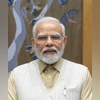 "PM Modi presents 12-point proposals to expand India-Asean cooperation")
WebinarsNew
Deep DiveNew
Explore Business Standard
Prime Minister Narendra Modi on Thursday presented a 12-point proposal to expand cooperation between India and 10-nation Asean in a range of areas such as connectivity
Prime Minister Narendra Modi on Thursday presented a 12-point proposal to expand cooperation between India and 10-nation Asean in a range of areas such as connectivity, trade and digital transformation even as he called for building a rules-based post-COVID world order.
The establishment of a multi-modal connectivity and economic corridor linking South East Asia, India, West Asia and Europe and offering to share New Delhi's digital public infrastructure stack with Asean partners are among the proposals announced by Modi at the annual Asean-India summit in this Indonesian capital.
The 12-point proposals also included the prime minister's call for a collective fight against terrorism, terror financing and cyber-disinformation as well as to raise issues being faced by Global South in multilateral fora.
Two joint statements -- one on maritime cooperation, and the other on food security were also adopted at the summit.
In his address at the summit, Modi said that progress towards a free and open Indo-Pacific and elevating the voice of the Global South is in the common interest of all.
The Association of Southeast Asian Nations (Asean) is considered one of the most influential groupings in the region, and India and several other countries including the US, China, Japan and Australia are its dialogue partners.
In his opening remarks, Modi described the grouping as the epicentre of growth and that New Delhi is committed to working "shoulder to shoulder" with it.
"The 21st century is Asia's century. It is our century. For this, it is necessary to build a rule-based post-Covidworld order and efforts by all for human welfare," the prime minister, co-chairing the summit, said.
"The progress of free and open Indo-Pacific and elevating the Voice of Global South is in the common interest of all," he said.
The prime minister also reaffirmed that Asean is the central pillar of India's Act East Policy and it fully supports Asean centrality and its outlook on the Indo-Pacific.
"Our history and geography connect India and Asean. Along with shared values, regional unity, peace, prosperity, and a shared belief in a multipolar world also binds us together," he said, adding the grouping holds a "prominent place" in India's Indo-Pacific initiative.
It was the first summit between the two sides since the elevation of their ties to a comprehensive strategic partnership last year.
"Today, even in an environment of global uncertainties, there is continuous progress in every field in our mutual cooperation.
This is a testament to the strength and resilience of our relationship," he said.
The prime minister's 12-point roadmap included an Asean-India fund for the digital future focusing on cooperation in digital transformation and financial connectivity and an announcement on the renewal of support to the Economic and Research Institute of Asean and East Asia (ERIA).
The proposals listed by the Ministry of External Affairs (MEA) included Modi's call for collectively raising issues being faced by Global South in multilateral fora and an invitation to the Asean countries to join the Global Centre for Traditional Medicine being established by the World Health Organisation in India.
The prime minister also offered to share India's experience in providing affordable and quality medicines to people through Jan-Aushadhi Kendras and invited Asean countries to join the Coalition for Disaster Resilient Infrastructure.
In his opening remarks, Modi said "Asean matters because here everyone's voice is heard, and Asean is the epicentre of growth because the ASEAN region plays a crucial role in global development."
"'Vasudhaiva Kutumbakam' -- 'one earth, one family, one future', this sentiment is also the theme of India's G-20 Presidency," Modi noted.
Asean-India dialogue relations started with the establishment of a sectoral partnership in 1992. This graduated to a full dialogue partnership in December 1995 and a summit-level partnership in 2002.
The ties were elevated to a strategic partnership in 2012.
The 10 member countries of Asean are Indonesia, Malaysia, the Philippines, Singapore, Thailand, Brunei, Vietnam, Laos, Myanmar and Cambodia.
The ties between India and Asean have been on a significant upswing in the last few years with the focus being on boosting cooperation in the areas of trade and investment as well as security and defence.
First Published: Sep 07 2023 | 4:26 PM IST

