
SC defers hearing in Places of Worship Act to first week of April
CJI Sanjiv Khanna also took exception to many intervention applications being filed in the case and said there should be a limit to such applications
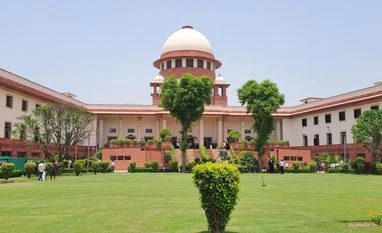 "SC defers hearing in Places of Worship Act to first week of April")
Explore Business Standard

Associate Sponsors
Co-sponsor
CJI Sanjiv Khanna also took exception to many intervention applications being filed in the case and said there should be a limit to such applications
The Supreme Court on Monday deferred to April first week the hearing on a batch of pleas relating to the Places of Worship (Special Provisions) Act, 1991.
A bench comprising Chief Justice Sanjiv Khanna and Justice Sanjay Kumar said the matter will be heard by a three-judge bench.
Earlier in the morning, the top court expressed its displeasure over the filing of several fresh pleas in a case related to validity of the Places of Worship (Special Provisions) Act, 1991 which mandates the religious character of a place to be maintained as it existed on August 15, 1947.
"We might not be able to take it up", the CJI said when senior advocate Indira Jaising, appearing for a litigant, mentioned a fresh plea for hearing during the day.
At the outset of the day's proceedings, the senior advocate mentioned the matter.
"There is a limit to which petitions can be filed. So many IAs (interim applications) have been filed we might not be able to take it up", the CJI said, adding that a date may be given in March.
The top court, through its December 12, 2024 order, effectively stalled proceedings in about 18 lawsuits filed by various Hindu parties seeking survey to ascertain original religious character of 10 mosques, including Gyanvapi at Varanasi, Shahi Idgah Masjid at Mathura and Shahi Jama Masjid, at Sambhal where four people died in clashes.
It had then listed all the petitions for an effective hearing on February 17.
Post December 12, several petitions have been filed, including by AIMIM chief Asaduddin Owaisi, Samajwadi Party leader and Kairana MP Iqra Choudhary and the Congress Party, seeking effective implementation of the 1991 law.
Choudhary, the Lok Sabha MP from Uttar Pradesh's Kairana, on February 14 sought to curb the increasing trend of legal actions targeting mosques and dargahs, which he submitted threaten communal harmony and the secular fabric of the country. The top court previously agreed to examine a separate plea of Owaisi with a similar prayer.
The Akhil Bhartiya Sant Samiti, a Hindu outfit, had moved the top court seeking to intervene in cases filed against the validity of provisions of the 1991 law.
Earlier, the bench was hearing about six petitions, including the lead one filed by lawyer Ashwini Upadhyay, challenging various provisions of the 1991 law.
The law prohibits conversion of any place of worship and provides for the maintenance of the religious character of any place of worship as it existed on August 15, 1947.
However, the dispute relating to Ram Janmabhoomi-Babri Masjid at Ayodhya was kept out of its purview.
Muslim bodies like the Jamiat Ulama-i-Hind seek strict implementation of the 1991 law to maintain communal harmony and to preserve the present status of mosques, sought to be reclaimed by Hindus on grounds that they were temples before invaders razed them.
On the other hand, petitioners like Updhyay have sought setting aside of Sections 2, 3 and 4 of the Act.
Among the reasons was also the contention that these provisions took away the right of judicial remedy to reclaim a place of worship of any person or a religious group.
"Ultimately, we will have to hear the arguments," the bench had said, observing the primary issue was with regard to Section 3 and 4 of the 1991 law.
While Section 3 deals with the bar of conversion of places of worship, Section 4 pertains to declarations as to the religious character of certain places of worship and bar of jurisdiction of courts, etc.
The Gyanvapi Mosque management committee, in its intervention plea, opposed several pending petitions that challenge the constitutional validity of the 1991 law.
The mosque committee listed a series of contentious claims made over the years concerning various mosques and dargahs (shrines), including the Shahi Idgah Masjid in Mathura, the Quwwat-ul-Islam Mosque near Delhi's Qutub Minar, the Kamal Maula Mosque in Madhya Pradesh, and others.
It, therefore, said the petitions challenging the Act were filed with "mischievous intent" to facilitate lawsuits against these religious sites, which the 1991 Act currently protected.
First Published: Feb 17 2025 | 12:46 PM IST

