The Supreme Court of India on Wednesday laid out the limits of judicial intervention in matters of faith, cautioning that reform cannot come at the cost of dismantling religion and that issues of belief and conscience fall outside the domain of courtroom debate.
The observations came on the tenth day of hearings before a nine-judge Bench examining the Sabarimala reference. The Bench engaged extensively with senior advocate Indira Jaising, who appeared for two women who had entered the Sabarimala temple following the 2018 verdict that struck down the bar on entry of women between 10 and 50 years of age.
A five-judge Constitution Bench, by a 4:1 majority verdict in September 2018, lifted a ban that prevented women between the ages of 10 and 50 years from entering the Sabarimala Ayyappa temple and held that the centuries-old Hindu religious practice was illegal and unconstitutional. This was later referred to a nine-judge Bench.
Jaising argued on Wednesday that the individual right to religious freedom under Article 25(1) would prevail over the rights of religious denominations under Article 26. She maintained that courts cannot remain entirely disengaged from religious questions, as judicial review is intrinsic to the constitutional framework.
Article 25(1) of the Constitution guarantees all people, not just citizens, the fundamental right to freedom of conscience and the right freely to profess, practice, and propagate religion. This right is not absolute and is subject to public order, morality, health, and other provisions of Part III. Article 26 guarantees the freedom to manage religious affairs for every religious denomination or its section, subject to public order, morality, and health.
Stressing that the Constitution is a living document, she submitted that fundamental rights must be read in a holistic manner and that religious practices are capable of evolution and reform.
Clarifying the nature of the claim, she said the assertion under Article 25(1) was confined to access to the temple and did not extend to altering rituals or ceremonies protected under Article 26.
At this stage, Justice BV Nagarathna remarked that Article 25(2)(b), which enables the state to enact laws for social reform, does not itself confer a right.
“In the name of reform, don't hollow out the religion,” she said, adding, “Let us not open rituals and ceremonies which are there for centuries.”
Jaising cautioned against abandoning the essential religious practice test altogether, arguing that courts would still need to assess whether discontinuing a practice would affect the core of a religion.
Justice MM Sundresh, however, observed, “The courts will have to be circumspect when dealing with essentiality.” Justice Ahsanuddin Amanullah also raised concerns about courts assuming the role of theologians.
When Jaising submitted that essentiality must be determined with reference to religious doctrine, Justice Amanullah questioned how courts could identify the correct interpretation amid divergent views within the same faith. “Every time the court intervenes, there has to be a limit because then the whole constitutional protection will look illusory,” he said.
He further suggested that courts may have to “lift the veil” to ascertain whether a petitioner is a genuine believer.
Jaising disagreed, contending that temple entry cannot be restricted only to believers, as individuals may visit for introspection or understanding, provided it is done with reverence. “I need to go with reverence, Sharda, and not for the purpose of mischief. We go to temples even though we don't completely follow the deity,” she said.
Justice Amanullah then questioned whether a person could accept only certain aspects of a deity while rejecting long-standing customs.
“Over centuries, certain things which are custom and practice have crystallised and become an essential part — you can't forget history. With so much passage of time, it has been transformed into a basic element. Suddenly, after so many years, somebody comes up!” he remarked.
Jaising, in response, asked what legal harm was caused by a woman entering the temple. She argued that while a woman may choose not to visit based on belief, it cannot be mandated that no woman should enter.
“Whether custom prevails or one woman's desire,” Justice Nagarathna asked.
“It’s not desire, it’s a freedom,” Jaising replied.
“Is it reverence if you are upsetting the people there?” Justice Amanullah asked, to which Jaising responded that hurt sentiments do not amount to legal injury.
Justice Sundresh warned that accepting such arguments could lead to disorder within temples, as individuals may begin to follow personal interpretations. “This will lead to dangerous consequences. Each one will go and say I don't want it in a particular way, it will be a disaster.”
Echoing the concern, Justice Nagarathna said, “It will be annihilating religion, which we don't want to be a part of. Matters of conscience cannot be a subject matter of debate in a secular court.”
When Jaising pressed for a remedy where a woman's rights are affected by prevailing practices, Justice Nagarathna pointed to the temple's custom barring women in the 10–50 age group.
Jaising, however, maintained that the restriction lacks any theological basis.
The arguments are set to continue.

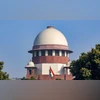 "SC flags limits of reform, says courts cannot 'annihilate religion'")


 Connect with us on WhatsApp