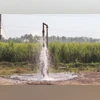
Bihar is grappling with severe groundwater contamination, with 30,207 rural wards exposed to "unsafe" drinking water that poses serious health risks, according to a new report.
The report, which was recently tabled in the assembly as part of the Bihar Economic Survey (2024-25), highlighted the presence of arsenic in groundwater in 4,709 such wards, fluoride in 3,789 wards and iron in 21,709 wards.
"Around 26 per cent of the rural wards in 31 districts, out of a total of 38, have groundwater sources affected by arsenic, fluoride and iron contamination beyond permissible limits," the state's Public Health Engineering Department (PHED) said in the study.
The affected wards are located in Buxar, Bhojpur, Patna, Saran, Vaishali, Lakhisarai, Darbhanga, Samastipur, Begusarai, Khagara, Munger, Katihar, Bhagalpur, Sitamarhi, Kaimur, Rohtas, Aurangabad, Gaya, Nalanda, Nawada, Sheikhpura, Jamui, Banka, Supaul, Madhepura, Saharsa, Araria and Kishanganj districts.
We are aware of the fact... sensing the gravity of the situation, the state government has decided to make rural Bihar hand pump-free' and provide safe drinking water to people in the rural areas under the Har Ghar Nal ka Jal' scheme," PHED Minister Niraj Kumar Singh told PTI.
The government is also implementing multi-village schemes (MVS) to improve water quality in the state, he said.
Under the 'Har Ghar Nal ka Jal' scheme, PHED is providing safe drinking water to 83.76 lakh families in rural areas, he said, adding, potable water is also being made available to families in the 30,207 rural wards where the contamination is high.
"The state government is already working on a plan to use river water for drinking purposes. In September 2024, Chief Minister Nitish Kumar laid the foundation stone of a Rs 1,347-crore project for the supply of water from Sone river for drinking purposes in Aurangabad, Dehri and Sasaram cities after necessary treatment," the minister said.
The scheme will use the water of Son river, ending the dependence of these cities on groundwater, he said. The project is likely to be completed in two years.
In 2023, the CM had dedicated the ambitious Ganga Water Supply Scheme (GWSS) or the 'Ganga Jal Apoorti Yojana' to the people of Gaya, Rajgir and Nawada.
Under the scheme, people in these districts are provided uninterrupted supply of clean and safe drinking water, Singh said.
Dr Manoj Kumar, a leading gastroenterologist in Bihar, told PTI, The high level of chemical contamination in groundwater is certainly a matter of concern. The authorities must identify the source of contamination and take appropriate steps. Besides, camps should also be organised in the affected wards on a regular basis to make people aware of the adverse effects of consumption of contaminated groundwater.
The authorities should come out with standardisation and classification of the quality of water used for drinking purposes, he said.
Kumar said drinking water quality standards should describe the quality parametres.
Water may contain many harmful constituents, yet there are no recognised and accepted standards for drinking water in the country. The type of contaminant and its health effects vary depending on the water source," he said.
The health impacts of water contamination can vary from a bout of stomach infection to terminal illnesses like cancer, Kumar said.
"The methods of purification depend on specific contaminants in a person's water source. Therefore, detailed water quality standards must be introduced by the authorities concerned, he added.

 "Severe groundwater contamination found in 30K rural wards in Bihar: Report")


