
Top judges across nations agree 'right to legal aid' must begin early: CJI
"We dwelt on the importance of technology in fostering access (to judiciary) which is equal between our citizens," he said
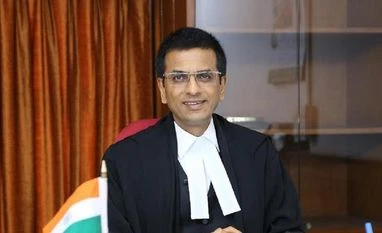 "Top judges across nations agree 'right to legal aid' must begin early: CJI")
Explore Business Standard
"We dwelt on the importance of technology in fostering access (to judiciary) which is equal between our citizens," he said
Chief Justice of India D Y Chandrachud Tuesday said top judges of several countries agree that the right to legal aid has to begin "at the earliest," even before arrest of an accused.
He said judges need to educate not just students but the masses also about it.
The CJI was speaking at the valedictory session of the two-day 'Regional Conference on Access to Legal Aid: Strengthening Access to Justice in the Global South' organised by the National Legal Services Authority (NALSA) here.
The conference was attended by President Droupadi Murmu, Vice President Jagdeep Dhankhar, and Law Minister Arjun Ram Meghwal.
Besides them, more than 200 delegates including Chief Justices of Bangladesh, Cameroon, Equatorial Guinea, Eswatini, the Maldives, Mauritius, Mongolia, Nepal, Zimbabwe and the ministers of justice from Kazakhstan, Nepal, Palau, Seychelles, South Sudan, Sri Lanka, Tanzania, and Zambia took part in the meeting.
"The right to legal aid, all Chief Justices have concluded, has to begin at the earliest stage, even before arrest," CJI Chandrachud said.
"There is a need for judges to publicise schemes and educate not just students but the wider community. And finally, we dwelt on the importance of technology in fostering access (to judiciary) which is equal between our citizens," he said.
Justice Chandrachud also referred to the use of celebrated Indian judgements by courts of nations like South Africa, Sri Lanka, Bangladesh and other countries and termed it a "trans-judicial communication."
He said that in the Chief Justice's round table he discussed several other avenues for collaboration including the use of technology to make courts more accessible.
"At the end of the round table, we successfully adopted the New Delhi principles on the role of the judiciary in ensuring equal access to justice for all in the Global South, which lays great emphasis on legal representation, legal aid, affordability, legal education, and awareness," he said.
The CJI said the participating nations realised that they are intrinsically part of a common sustainable development goal to promote legal aid.
"We have accepted that judges have a vital role to play in facilitating access to justice and legal aid is an intrinsic element of the process.
"Legal Aid is provided either in our Constitutions or in our statutes or in both. In some countries, state funding is channelised through autonomous institutions like India. In others, the executive performs the role of being the dispenser of legal aid," he said.
The CJI also referred to the concept of public interest litigation and the attempts of the Indian Supreme Court in increasing the access to justice by doing away with the legal requirement of "locus standi" (a right to appear in a court) in a court case.
"Our court removed procedural barriers to access the Supreme Court and allowed all citizens to approach the court for the alleviation of socio-economic injustice...the South African Constitutional Court has on several occasions relied on Indian jurisprudence in that regard," he said.
Using the expression "trans-judicial communication," he said in recent years, the decisions of constitutional courts in several global south jurisdictions such as South Africa, India, Bangladesh, Nepal, and Kenya, have become the primary catalysts of comparative constitutional law.
"Mutual inspiration is increasingly drawn from the case law of peer courts of other countries and even other continents, which gives rise to the cross fertilisation of legal ideas," he said.
He also named certain judicial decisions on such issues as basic structure doctrine, right to privacy, the rarest of rare doctrine for awarding the death penalty, the public trust doctrine, and environmental law where other nations' courts followed Indian judgements.
"A seven-judge bench of Kenya's court of appeal has also applied the basic structure doctrine to place limits on the amending powers of Parliament and foster responsive constitutionalism," he said.
"Further, the Sri Lankan Supreme Court discussed as many as 20 Indian cases that involved Article 14 of the Indian constitution in a case about equality of opportunity in university admissions," he said.
And the Indian Supreme Court has also greatly benefited from the "creative jurisprudence emerging from several nations in the Global South," he said, adding, the region "has in many ways become a North Star for all nations around the globe."
Besides judicial decisions, courts across world have also learned from each other on the administrative side to facilitate access to justice, he said.
In his inaugural address, the CJI on Monday said access to justice cannot be secured only by crafting pro-people jurisprudence in judgments, but requires active progress on the administrative side of a court, such as improving infrastructure and enhancing legal-aid services.
President Murmu, Law Minister Meghwal, and SC judges Justices Sanjay Kishan Kaul and Sanjiv Khanna-- also spoke at the valedictory session of the conference.
(Only the headline and picture of this report may have been reworked by the Business Standard staff; the rest of the content is auto-generated from a syndicated feed.)
First Published: Nov 28 2023 | 9:50 PM IST

