Only 15% paddy, 9.6% wheat farmers benefit from MSP system, says paper

However, the MSP system also gives farmers a 23.2 per cent income bump from paddy and 9.6 per cent more income from wheat cultivation
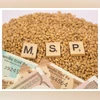
MSP
Small and marginal farmers, who constitute the bulk of India’s farming ecosystem, don’t get the benefits of the existing MSP system in the same proportion. | Photo: Shutterstock.com
Sanjeeb Mukherjee New Delhi
4 min read Last Updated : Mar 04 2025 | 11:56 PM IST
As the Union government and a section of farmers sit for another round of negotiations over the next few days to discuss demands that include legally-guaranteed minimum support price (MSP), a recent paper by a state-run institute says that though MSPs lead to higher incomes and yields, only 15 percent of paddy farmers and just 9.6 percent of wheat farmers have benefited from the MSP-based procurement system.
 
Additionally, paddy farmers are able to sell around 24 per cent of their marketable surplus at the benchmark rate; for wheat farmers, that number is 21 per cent. More worryingly, the bulk of gains from MSP procurement are disproportionately cornered by large farmers who have higher marketable surplus.
 
In contrast, small and marginal farmers, who constitute the bulk of India’s farming ecosystem, don’t get the benefits of the existing MSP system in the same proportion.
 
The paper titled, ‘Dilemma of Agriculture Price Policy Reforms: Balancing Food Security, Farmers’ Interests, and Sustainability of Natural Resources,’ and published by ICAR’s National Institute of Agricultural Economics and Policy Research (NIAP) has been written by Prabhat Kishore, P S Birthal, and S K Srivastava. Kishore is a scientist at NIAP, Birthal is the director, and S K Srivastava is senior scientist at the institute.
 
“Large farmers have a higher engagement with the MSP-backed procurement system and 31.3 per cent of paddy farmers and 23.5 per cent of wheat farmers who participate in the market dispose 37.8 per cent of their marketable surplus of paddy and 29.8 per cent of wheat at the MSP,” the paper said.
 
“Only 10.5 per cent and 4.5 per cent of marginal farmers selling paddy and wheat, respectively, participate in the MSP-backed procurement system, disposing of 12.6 per cent surplus paddy and 7.3 per cent surplus wheat,” the paper added.
 
The paper uses household-level data from the Situation Assessment Survey of Agricultural Households 2018-19, conducted by the National Sample Survey Office of the Ministry of Statistics and Programme Implementation on production and disposal patterns of rice and wheat, the main crops procured by the government at MSP.
 
However, the paper also said that MSP safeguards farmers from price risks, pointing out that price realisation from sales in open markets is lower than that of MSP. The estimated gap between the two is 13.2 per cent for paddy and 3.5 per cent for wheat. 
 
“MSP incentivises farmers to produce more: MSP incentivises farmers to adopt modern agricultural technologies, such as improved seeds and fertilizers, resulting in higher crop yields. This is evident from our findings,” the paper said.
 
It pointed out that farmers in the MSP system could realise a 13.5 per cent higher yield of paddy and a 5 per cent higher yield of wheat.
 
“Thus, by reducing market uncertainty and price risk and contributing to yield enhancement, the MSP-backed procurement system could result in a 23.2 per cent higher income from paddy cultivation and 9.6 percent from wheat cultivation,” it said.
 
To address the complex dynamics of the procurement system, the paper suggested upscaling the price deficiency payment scheme and targeting of procurement from small farmers among measures that could sort this out.
 
“The current procurement system is open-ended, wherein farmers can sell any quantity of grains to government agencies at the MSP. Expectedly, larger farmers benefit more because of their larger scale. The government may target grain procurement from smallholders who produce in excess of their consumption requirements, but have significantly less participation in the MSP-backed procurement system,” the paper said.
 
It said that the findings show that small farmers - those who have less than two hectares under cultivation - produce 53.6 per cent of paddy and sell nearly 50 per cent of it. The corresponding figures for wheat are 45 per cent and 39.9 per cent, respectively.
 
“It is worth noting that small farmers contribute more than one-third to the government’s paddy procurement and one-fourth to wheat procurement. Prioritising procurement from marginal and small farmers ensures equity in MSP policy,” the paper said. It has also suggested exploring the futures trading platform to manage the price risk.
 
The paper also advocated investing in maintenance of canal irrigation systems and revisiting the agricultural research agenda along with diversification of crops from wheat and rice to other crops as options to make MSP more broad-based and effective.

One subscription. Two world-class reads.

Already subscribed? Log in

Subscribe to read the full story →
*Subscribe to Business Standard digital and get complimentary access to The New York Times

Smart Quarterly

₹900

3 Months

₹300/Month

SAVE 25%

Smart Essential

₹2,700

1 Year

₹225/Month

SAVE 46%
*Complimentary New York Times access for the 2nd year will be given after 12 months

Super Saver

₹3,900

2 Years

₹162/Month

Subscribe

Renews automatically, cancel anytime

Here’s what’s included in our digital subscription plans

Exclusive premium stories online

  • Over 30 premium stories daily, handpicked by our editors

Complimentary Access to The New York Times

  • News, Games, Cooking, Audio, Wirecutter & The Athletic

Business Standard Epaper

  • Digital replica of our daily newspaper — with options to read, save, and share

Curated Newsletters

  • Insights on markets, finance, politics, tech, and more delivered to your inbox

Market Analysis & Investment Insights

  • In-depth market analysis & insights with access to The Smart Investor

Archives

  • Repository of articles and publications dating back to 1997

Ad-free Reading

  • Uninterrupted reading experience with no advertisements

Seamless Access Across All Devices

  • Access Business Standard across devices — mobile, tablet, or PC, via web or app

Topics :farm MSPagriculture economyfarmer fair priceCanal irrigation

Next Story


