Rabi sowing starts on a positive, crop realisations continue to disappoint

While key inputs such as water, seeds and fertilisers are adequate, the poor price performance of the kharif harvest might dampen farmers earning
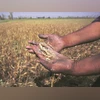
Rabi crops, agriculture
Representative Image
Sanjeeb Mukherjee New Delhi
5 min read Last Updated : Nov 11 2025 | 6:34 PM IST
The sowing of rabi crops has started on a very positive note driven by an extended monsoon and adequate soil moisture. Data from the department of agriculture through November 7, 2025, shows that rabi crops have been sown in around 13.03 million hectares (mn/ha) of land, which is 27.12 per cent more than the area covered during the same period last year.
 
Normally, rabi crops are sown in around 64 mn/ha across most parts of north India. Wheat, chana and mustard are the main rabi crops grown in India, and earling sowing of all three is higher this year until November 7, compared to last  year.
 
Good post-monsoon rains
 
Data shows that from October 1–November 11, the cumulative rainfall across the country was 37 per cent higher than its Long Period Average (LPA), with regional variations with rainfall in east and north-east India being 16 per cent higher, north-west India 128 per cent more, central India 63 per cent surplus, and south peninsular India being 37 per cent more.
 
When it comes to soil moisture, official data showed that soil moisture as of Oct 29th 2025 was similar or better than the average of the past nine years in major parts of Madhya Pradesh, Rajasthan, Uttar Pradesh, Chhattisgarh, Gujarat, Jharkhand, Odisha, Haryana, Punjab, Karnataka, Kerala, Tamil Nadu, Maharashtra, Telangana, Andhra Pradesh and Bihar.
 
All these states are big producers of all major rabi crops.
 
However, the soil moisture was only lower than average of the past nine years in pockets of Bihar, in north-eastern parts of Jharkhand, in pockets of eastern UP, and in pockets of Assam and West Bengal.
 
The supplies of all other inputs, such as seeds, fertilisers, and pesticides have also been  reported to be adequate ahead of the main sowing season.
 
Going forward, experts say the momentum in rabi sowing is likely to continue in the coming months as well, given that water levels in reservoirs are better than last year and groundwater situation is also healthy.
 
Reservoir levels higher, groundwater falls
 
As of October 30, 2025, the total live water storage in 161 important reservoirs across the country (monitored by Central Water Commission) was 165.782 billion cubic metres, which is 90.85 per cent of total live storage capacity (182.479 billion cubic metres). The current year's storage is nearly 104.4 percent of last year's storage and 116.3 percent of the average storage over the past 10 years in the same period.
 
As far as groundwater is concerned, data shows that in August 2025, around 89 per cent of the country's monitoring stations exhibited a depth to water level within 10 meters below ground level. Deeper water levels of more than 20 meters are observed in around 5 per cent of stations of the country covering mainly the western states, especially Western Rajasthan, Punjab, Haryana and Chandigarh.
 
“The deeper groundwater level in the states like western Rajasthan, Punjab, Haryana and Chandigarh during August 2025 has been significantly influenced by the over extraction of groundwater compared to the recharge during the monsoon period,” an official report said.
 
The report said that the annual water level comparison (August 2024 versus August 2025) has shown that about 56.5 per cent of total analysed stations of the country experienced a rise in annual water level fluctuation because of the higher monsoon rainfall this year.
 
It added that about 70 per cent of the analysed stations of the unconfined aquifer experienced a rise of water level in August 2025, compared to the decadal mean water level fluctuation from 2015-2024.
 
It is worth noting here that data for groundwater comes with a lag; hence, there has likely been further improvement in ground water levels in subsequent months.
 
Crop prices under the scanner
 
However, when it comes to crop prices and realisation from farming, farmers could be in for a hard time because mandi prices of major kharif crops continued to trade below their respective minimum support prices (MSPs) in late October, official data showed.
 
As of October 31, among kharif crops, maize has led the fall with an almost 27 per cent drop in mandi prices as compared to its respective MSP, followed by groundnut, sunflower and moong.
 
Soybean was selling about 24 per cent lower than its MSP of Rs 5,328 per quintal, while moong was around 22 per cent lower than its MSP of Rs 8768 per quintal.
 
This could have serious implications on farmers’ earnings as the kharif harvest has picked up pace since late October. Official data showed that as of October 31, around 38 per cent of the total kharif area has been harvested across the country.
 
Of this, around 60 per cent area of pulses, mainly in urad bean (64 per cent), mung bean (93 per cent) and moth bean (100 per cent) has been harvested. At least 56 per cent area of oilseeds, mainly groundnut (55 per cent) and sesamum (60 per cent) has also been cultivated.
 
The Centre on October 31 imposed a 30 per cent import duty on yellow peas effective November 1 to stem the fall in domestic pulses' prices. Days before that, it announced a Rs 15,095.83 crore procurement plan for pulses and oilseeds.
 
The plan, which will be implemented in Telangana, Odisha, Maharashtra and Madhya Pradesh for kharif season 2025-26, also includes approval for the launch of Bhawantar Bhugtan Yojana (roughly, Price Differential Payment Scheme) for soybeans in Madhya Pradesh.
 
These steps are expected to start showing results in the weeks to come. If not, following a poor kharif, farmers might continue to suffer in the rabi season as well. 
   

One subscription. Two world-class reads.

Already subscribed? Log in

Subscribe to read the full story →
*Subscribe to Business Standard digital and get complimentary access to The New York Times

Smart Quarterly

₹900

3 Months

₹300/Month

SAVE 25%

Smart Essential

₹2,700

1 Year

₹225/Month

SAVE 46%
*Complimentary New York Times access for the 2nd year will be given after 12 months

Super Saver

₹3,900

2 Years

₹162/Month

Subscribe

Renews automatically, cancel anytime

Here’s what’s included in our digital subscription plans

Exclusive premium stories online

  • Over 30 premium stories daily, handpicked by our editors

Complimentary Access to The New York Times

  • News, Games, Cooking, Audio, Wirecutter & The Athletic

Business Standard Epaper

  • Digital replica of our daily newspaper — with options to read, save, and share

Curated Newsletters

  • Insights on markets, finance, politics, tech, and more delivered to your inbox

Market Analysis & Investment Insights

  • In-depth market analysis & insights with access to The Smart Investor

Archives

  • Repository of articles and publications dating back to 1997

Ad-free Reading

  • Uninterrupted reading experience with no advertisements

Seamless Access Across All Devices

  • Access Business Standard across devices — mobile, tablet, or PC, via web or app

Topics :rabiRabi oilseedsRabi cropsrabi sowingRabi crop

Next Story



