Sowing area swells to 109.23 mn hectares but floods pose risk to yields

As of September 6, improved monsoon rainfall has boosted Kharif sowing to 109.23 million hectares, the data released by the Centre showed
Farmers, Farmer, agriculture
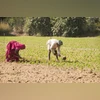
The expansion of cultivated land offers a promising outlook for the agricultural sector. (Photo: Shutterstock)
Nisha Anand New Delhi
2 min read Last Updated : Sep 10 2024 | 10:48 AM IST
The improved monsoon rainfall has increased the total sowing area of Kharif crops to 109.23 million hectares, up 2.16 per cent from last year, the data from the  Ministry of Agriculture & Farmers' Welfare showed on Monday. This represents 99.86 per cent of the normal sowing area of 109.58 million hectares. ‘Normal sowing area’ is calculated based on averages from 2018-19 to 2022-23.


According to the report, Paddy sowing has reached 40.95 million hectares, 2 per cent above the normal and 4.06 per cent higher than last year. Sowing of coarse cereals or ‘Shree Anna’ also exceeded the normal by 4.37 per cent, reaching 18.87 million hectares. Pulses saw a 7.58 per cent increase to 12.62 million hectares, with Tur dal covering 4.57 million hectares.

The rise in paddy cultivation comes amid the India Meteorological Department’s (IMD) forecasts of widespread rainfall in the country.

What does this mean for harvest?

The expansion of cultivated land offers a promising outlook for the agricultural sector, with nearly all crops now sown. However, persistent heavy rainfall in certain regions of India presents a serious threat to overall yields in the weeks ahead. Widespread flooding in states like Andhra Pradesh and Telangana has already caused significant crop damage. The full scope of the destruction will only become clear following a comprehensive evaluation, which is set to be conducted by the central government.

During his visit to flood-affected Andhra Pradesh, Union Agriculture Minister Shivraj Singh Chouhan said last week that flooding has affected 200,000 farmers and damaged crops across 180,000 hectares. He said crops (including paddy and chilli) and household items were heavily damaged in flood-hit Telangana. The officials have begun evaluating damage assessment work after which the Centre “will provide all possible support,” he said.
*Subscribe to Business Standard digital and get complimentary access to The New York Times

Smart Quarterly

₹900

3 Months

₹300/Month

SAVE 25%

Smart Essential

₹2,700

1 Year

₹225/Month

SAVE 46%
*Complimentary New York Times access for the 2nd year will be given after 12 months

Super Saver

₹3,900

2 Years

₹162/Month

Subscribe

Renews automatically, cancel anytime

Here’s what’s included in our digital subscription plans

Exclusive premium stories online

  • Over 30 premium stories daily, handpicked by our editors

Complimentary Access to The New York Times

  • News, Games, Cooking, Audio, Wirecutter & The Athletic

Business Standard Epaper

  • Digital replica of our daily newspaper — with options to read, save, and share

Curated Newsletters

  • Insights on markets, finance, politics, tech, and more delivered to your inbox

Market Analysis & Investment Insights

  • In-depth market analysis & insights with access to The Smart Investor

Archives

  • Repository of articles and publications dating back to 1997

Ad-free Reading

  • Uninterrupted reading experience with no advertisements

Seamless Access Across All Devices

  • Access Business Standard across devices — mobile, tablet, or PC, via web or app

More From This Section

Topics :sowingKharif seasonKharif sowingsBS Web Reportsagriculture economyagricultural sector

First Published: Sep 10 2024 | 10:48 AM IST

Next Story