Home / Industry / Auto / How the auto component industry is gearing up for Trump's 25% tariffs
How the auto component industry is gearing up for Trump's 25% tariffs
Indian auto component companies say fear the US could grant selective relaxations to certain countries which could adversely impact them
premium
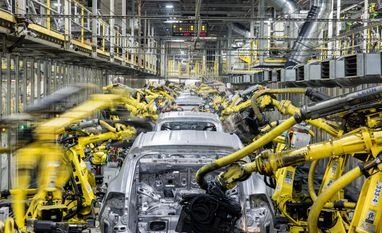
Auto component players point out that the scope of the tariff will depend on the list of automotive parts and vehicles to be published. Image: Bloomberg
3 min read Last Updated : Mar 28 2025 | 11:01 AM IST
Indian auto component companies say that while their competitive position may not change with a flat 25 per cent tariff on components, they fear the US could grant selective relaxations to certain countries, which could adversely impact them.
They have conveyed to the government that the demand for automobiles in the US could slump due to the steep tariff hike, as passenger cars become more expensive. This could hurt India’s overall auto component exports.
Auto component manufacturers are banking on the swift conclusion of the bilateral trade agreement with the US, which they expect will offer relief. Currently, India exports auto components worth $6.9 billion to the US at near-zero duty. For the United States, India accounts for only 4 per cent of total auto component imports. But for India, the US is the largest export market, making up 31 per cent of total auto component exports.
On the other hand, the US imports $1.4 billion worth of auto components from India, with duties ranging between 7.5 per cent and 15 per cent.
A top executive of a leading auto component company said: “If, in the bilaterals, we agree to retain the current tariffs and the US does the same (up to 15 per cent), we are fine, as it will be lower than the 25 per cent that other exporting countries have to pay. If India decides to bring it down to zero again, with the US reciprocating — we have no problem with that either.”
Dismissing concerns that zero duty could result in a surge in component exports from the United States and harm Indian manufacturers, he added: “We have no such fears, as the Indian component industry is globally competitive and already has free trade agreements with South-East Asian countries such as Japan and Korea, from where components are anyway being exported to India.”
However, there are areas where clarity is still needed. For instance, it is unclear which components the 25 per cent tariff will apply to. The order only mentions a few key parts, including engines, transmissions, powertrain components, and key electrical items.
According to component manufacturers, while vehicle tariffs take effect from April 3, 2025, the effective date for components and parts is pending, but will be no later than May 3, 2025.
The 25 per cent tariff will also not apply to parts qualifying under the US-Mexico-Canada Agreement (USMCA) until a process is established to apply it only to the non-US content of those parts. This is significant as the US imports as much as 38 per cent of its auto components from Mexico.
Auto component players point out that the scope of the tariff will depend on the list of automotive parts and vehicles to be published in Annexure I of the Federal Register in the coming days.




