No need to activate countercyclical capital buffer for banking system: RBI
Credit to GDP gap is the difference between credit-to-GDP ratio and the long term trend value of credit-to-GDP ratio at any point in time, according to RBI
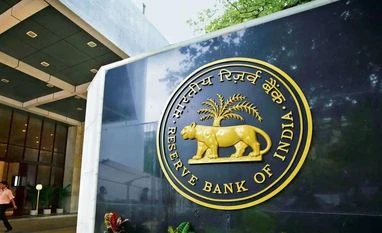
BS Reporter Mumbai In a relief to the banking system, the Reserve Bank of India today said that it is not necessary to activate the countercyclical capital buffer (CCyB) at this point in time.
The decision is based on the review and empirical analysis of the CCyB indicators, according to the RBI’s statement. CCyB is maintained as part of the Capital Adequacy Ratio (CAR). The decision to activate CCyB is mainly based on the Credit-to-gross domestic product (GDP) gap.
Karthik Srinivasan, group head of financial sector ratings, ICRA said this is a reiteration of an earlier stand. Banks in India are adequately capitalised.
The aim of the CCyB regime is twofold. Firstly, it requires banks to build up a buffer of capital in good times. This may be used to maintain the flow of credit to the real sector in difficult times. Secondly, it achieves the broader macro-prudential goal of restricting the banking sector from indiscriminate lending during periods of excess credit growth. The indiscriminate lending has often been associated with the building up of system-wide risk.
In February 2015, RBI put in place a framework on CCyB would be activated as and when the circumstances warranted. The decision would normally be pre-announced (usually a lead time of four quarters).
For CCyB decision, RBI may also use supplementary indicators such as incremental credit-deposit ratio for a moving period of three years to CCyB decision.
Credit to GDP gap is the difference between credit-to-GDP ratio and the long term trend value at any point in time.
The CCyB may be maintained in the form of Common Equity Tier 1 (CET 1) capital or other fully loss absorbing capital only. The amount of the CCCB may vary from 0 to 2.5 per cent of total risk weighted assets (RWA) of the banks.

 "No need to activate countercyclical capital buffer for banking system: RBI")


 Connect with us on WhatsApp