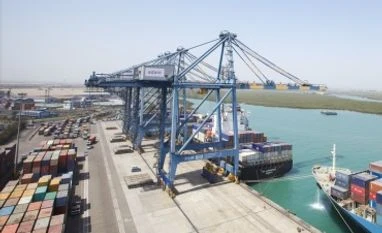
The ministry of ports, shipping, and waterways (MoPSW) on Wednesday launched green port guidelines for India’s 12 major ports in another push to decarbonise the transport sector, a major contributor to the country’s carbon emissions.
According to the Harit Sagar guidelines, the ministry will push for data monitoring based on environmental performance indicators. “This also covers aspects of the National Green Hydrogen Mission pertaining to ports, development of green hydrogen facility, LNG bunkering, offshore wind energy, and provides provision for adopting global green reporting initiative standard,” it said.
The guidelines focus on minimising the impact on biotic components of the harbour ecosystem. “It lays emphasis on use of clean, green energy in port operation, developing port capabilities for storage, handling and bunkering greener fuels like green hydrogen, green ammonia, green methanol, ethanol, etc.,” a statement by the ministry said.
The objective of the guidelines is to minimise waste through principles, such as reduce, reuse, repurpose, and recycle to attain zero waste discharge from port operations.
MoPSW Secretary Sudhansh Pant said, “Our four major ports — Deendayal Port, Visakhapatnam Port, New Mangalore Port, and VOC Port — are already generating more renewable energy than their demand. From now on, our ports will be able to evaluate themselves on the environmental indicators to know their capability in the environmental aspects.”
Green hydrogen is defined as hydrogen produced by splitting water into hydrogen and oxygen using renewable electricity. The ministry aims to develop Kandla, Paradip, and Tuticorin ports as green hydrogen hubs in the coming years.
Senior officials present at the event said while proliferating green hydrogen in the Indian shipping sector was a distant objective, there was significant demand in European markets for the green fuel and the Centre was exploring export opportunities in the sector. “As for us, we have enough alternate and more feasible renewable sources of energy to decarbonise port operations,” the official said.
The Centre’s draft policy in February 2022 had explored options such as viability gap funding for capital-intensive projects and establishing a carbon cess on port operators and users which would be further used to fund green initiatives.
MoPSW Minister Sarbananda Sonowal intends to increase the share of renewable energy to 60 per cent of the total power demand of each of its major ports from a present share of less than 10 per cent. “The ports have also aimed to reduce carbon emissions, per ton of cargo handled, by 30 per cent by the year 2030,” Sonowal had earlier said.

 "Govt plans green fuel port usage, bunkering in net-zero target push")












 Connect with us on WhatsApp