
Govt amends rules to mandate gencos to give surplus power to exchanges
The minister said that some power generators were not offering this surplus power in the market, thus resulting in unused power capacity at the national level
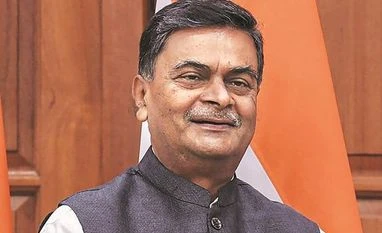 "Govt amends rules to mandate gencos to give surplus power to exchanges")
WebinarsNew
Deep DiveNew
Explore Business Standard
The minister said that some power generators were not offering this surplus power in the market, thus resulting in unused power capacity at the national level
The government on Friday said that the rules related to surplus power and late payment surcharge have been amended to ensure adequate supply of electricity to consumers and meet the growing demand.
The Government of India has amended the Electricity (Late Payment Surcharge and Related Matters) Rules of 2022 which will enhance the reliability of power supply for all consumers, a power ministry statement said.
Union Minister for Power and New & Renewable Energy R K Singh said that a key amendment which has been made is related to surplus power which is within the declared generation capacity but not requisitioned by distribution companies.
The minister said that some power generators were not offering this surplus power in the market, thus resulting in unused power capacity at the national level.
To address this issue and optimize the use of available power, power generators that do not offer their surplus power will now not be eligible to claim capacity or fixed charges corresponding to that surplus quantum.
Additionally, this surplus power cannot be offered for sale in the power exchange, at a price of more than 120 per cent of energy charge plus applicable transmission charge.
This will increase the likelihood of the surplus electricity getting purchased and utilized.
Furthermore, amendments have been made to align the Rules with statutory provisions related to accessing the national power grid.
These amendments facilitate distribution companies facing curtailment of access due to payment defaults, in getting quicker restoration of access to the national grid once they settle their outstanding dues.
Singh stated that the Electricity (Late Payment Surcharge and Related Matters) Rules were introduced in 2022 to tackle cash flow challenges faced mainly by generation companies and transmission companies and to promote timely payments across the power sector.
Since their notification, there has been significant progress in recovering outstanding dues, with most distribution companies now adhering to regular payment schedules.
The total unpaid bills have reduced from around Rs 1.4 lakh crores in June 2022 to around Rs. 48,000 crores in February 2024, it stated.
The amendments were notified on February 29, 2024.
(Only the headline and picture of this report may have been reworked by the Business Standard staff; the rest of the content is auto-generated from a syndicated feed.)
First Published: Mar 01 2024 | 8:38 PM IST

