Home / Industry / News / India's energy security hampered by years of coal backlash, misses targets
India's energy security hampered by years of coal backlash, misses targets
India has seen a dramatic boom in renewable energy installations - but that's not been enough to supply increasing power needs, prompting the government to also double down on coal power
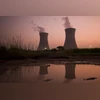
The coal-fired Dadri Power Plant in Uttar Pradesh | Image: Bloomberg
India’s plan to expand one of the world’s largest coal power fleets in order to meet its growing energy needs is being undone by a shortage of companies able and willing to help build new plants.
Out of the 15 gigawatts of thermal power the government aimed to add in the year to March 2025, the country is likely to bring online only about half, according to officials interviewed by Bloomberg News. India also missed its target in the previous two years.
In part, trouble stems from the global pushback against coal over the past decade, a movement that dried up financing and investor enthusiasm, and left India with only a couple of suppliers for plant machinery. That’s resulted in a shortage of vital equipment, the officials said. At risk is New Delhi’s effort to meet the power needs of industries and households, especially in the hottest months when demand surges and blackouts are rampant.
India has seen a dramatic boom in renewable energy installations — but that’s not been enough to supply increasing power needs, prompting the government to also double down on coal power. A 2023 plan sought to add nearly 90 gigawatts of capacity over the next decade.
Today, there are currently only two viable suppliers of key equipment like boilers, turbines and generators: state-run Bharat Heavy Electricals Ltd., known as BHEL, and engineering giant Larsen & Toubro Ltd. Having already begun to distance itself from coal, L&T had to be persuaded by the government to keep bidding for projects, according to officials aware of the matter.
Major overseas providers, like General Electric Co. and Toshiba Corp., have also stopped taking new orders on coal plants.
L&T’s president for energy, Subramanian Sarma, said the company could help India meet its goals. “If there is a sound forward-looking plan and good visibility on how the market is going to evolve, then we can always match the required demand,” he said.
BHEL and the power ministry didn’t respond to a request for comment.
Still, the lack of competition has already pushed up costs. The going rate for a new power plant has risen to about 130 million rupees ($1.5 million) per megawatt in recent tenders by India’s largest power firm NTPC Ltd., the officials said — more than 50% higher than estimates in 2023.
At such price tags, developers are hesitant to place orders. Madhya Pradesh Power Generating Co. is among those pushing back, beginning talks with BHEL to cut the price of a project it plans to build near the town of Amarkantak, according to one of the officials with knowledge of the matter. BHEL was the only bidder and quoted well above the generation company’s comfort level, he said.
Import Curbs
Another factor behind today’s woes is history. Sluggish power demand almost a decade ago, at a time of slower economic growth, forced many domestic suppliers to exit the business. Then came the pandemic, prolonging a drought of orders.
A post-Covid jump in power needs put official attention back on coal plants — but the picture by then was complicated by rising tensions with Beijing. A deadly border clash between the two neighbors in 2020 prompted Prime Minister Narendra Modi’s government to halt import of power equipment from China. Until this point, the country was among large overseas suppliers of not just power machinery, such as boilers and turbines, but also of loans to finance the facilities.
Since then, India has shifted to other nations for critical power plant parts. For example, specialized pipes and ducts used in boilers are now being shipped from Germany and Italy, a change that adds to delivery time and freight costs.
Infrastructure outside the main plant faces even greater challenges. Water connectivity, cooling towers, coal and ash handling units, plus pollution control scrubbers, are all becoming tougher to build due to a lack of contractors.
The good news for the climate is that rising costs could accelerate the green energy transition, said Sunil Dahiya, founder and lead analyst at New Delhi-based environment advocacy firm EnviroCatalysts. Coal begins to look like a far riskier investment.
If coal projects are built at these prices, “there’s a very high likelihood that we’d see a new wave of stranded assets in the power generation sector,” Dahiya said in a telephone interview. “When the economics don’t support a form of energy, that’s when a drastic shift happens. We are at that moment now.”


 "India's energy security hampered by years of coal backlash, misses targets")


