SC refuses to accept govt application on 2012 2G spectrum allocation
Application 'misconceived' and there is no 'reasonable cause' for entertaining it, says court registrar
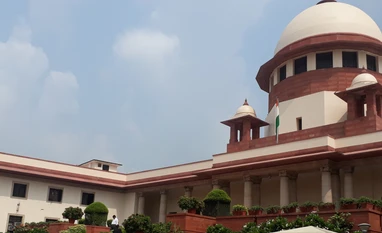
BS Reporter New Delhi The Supreme Court registrar has refused to accept a government application for “clarification” of its 2012 judgment on the allotment of 2G spectrum.
"This application has been filed to seek appropriate clarifications from this Honourable Court regarding the Centre for Public Interest Litigation judgment, to establish a spectrum assignment framework that includes methods of assignment other than auction in suitable cases, to best serve the common good," said the government's application filed on December 12 last year. It was mentioned in the court last week and was likely to come up for hearing this week.
It noted that all cases of administrative assignments have been on the condition that these “shall not be treated as final but purely interim and provisional; subject to the government's final decision on pricing and policy in the matter”.
It sought certain clarifications from the Supreme Court in the 2G matter so that the process of administrative allocation can continue.
The registrar refused to entertain the application, stating that the government was seeking a review of the 2012 order under the guise of seeking clarifications. The application is “misconceived” and there is no “reasonable cause” for entertaining it, especially after such a lengthy period, it said.
The registrar said it is clear that the government seeks the review of the order passed by the Supreme Court in the guise of filing the present application.
In 2012, the Supreme Court criticised the 'first-come, first-served' method for spectrum allocation. In what was known as the Centre for Public Interest Litigation judgment, the court had quashed the 2G spectrum allotted by the United Progressive Alliance government.
Since then, governments have issued spectrum administratively in cases where auctions are not technically or economically preferred or optimal, the Centre informed the Supreme Court in its latest application.
The Telecom Bill's First Schedule lists satellite spectrum and 18 other sectors where administrative allocations will be compulsory. The sectors include law enforcement, public broadcasting, in-flight and maritime connectivity, the Indian Army and Coast Guard, and radio backhaul for telecom services.
Previously, many of these areas lacked a clear process for spectrum allocation, resulting in delays and disputes.

 "SC refuses to accept govt application on 2012 2G spectrum allocation")


 Connect with us on WhatsApp