The total number of trade unions that filed returns in 2019 more than halved to a record low of 2,311 from the previous year, according to the latest annual data released by the Labour Bureau. The earliest data available shows there were 7,242 such trade unions in 1996, while it came close to the present figure in 2013 at 2,534.
The membership of trade unions that submitted returns in 2019 fell to its lowest levels in nine years at 6.2 million, dropping from 12.1 million in 2018. Meanwhile, the average membership per union increased to 2,675 in 2019 from 2,537 in 2018.
The annual data on trade unions is released by the Labour Bureau with a lag, and is a compilation of data furnished by labour departments in the states and Union Territories, as the rules framed under the Trade Unions Act, 1926, impose an obligation on all registered trade unions to submit annual statutory returns pertaining to their financials and membership to the Registrar of Trade Unions in their respective states and UTs.
A senior functionary of the Bharatiya Mazdoor Sangh, which is affiliated to the Rashtriya Swayamsevak Sangh, said registered unions were given three years to file returns and many a time a union becomes non-operational due to closure of factory units or internal squabbles or other reasons. “In such cases, it becomes difficult to maintain records, which then gets reflected in the annual statistics,” he added.
Of the total unions that submitted returns in 2019, the ‘Manufacturing Group’ category accounted for 27.7 per cent, followed by ‘Other Service Activities’ (12.2 per cent). In terms of membership, ‘Human Health and Social Work Activities’ category (29.1 per cent) accounted for the most members, followed by the ‘Construction’ category (17.8 per cent).
Women accounted for 39.4 per cent of total members in 2019, which was slightly lower than in 2018, when 40 per cent of members were women. A majority of women were in the ‘Human Health and Social Work Activities’ category (72.7 per cent), followed by ‘Construction’ (10.3 per cent) and ‘Other Service Activities’ (3.8 per cent).
According to the Labour Bureau data, among the unions that submitted returns, 1,693 were state unions (meaning that they operate within a state) and 618 were central ones (meaning they operate beyond a state). Rajasthan (779) had the highest number of such unions, followed by Gujarat (406), and Uttar Pradesh (403).
Surprisingly, major industrialised states like Maharashtra, Tamil Nadu or Karnataka don’t find mention in the data, indicating their non- compliance with the rules, thereby lowering the national figure.
Amarjeet Kaur, general secretary of the All India Trade Union Congress (AITUC), said that though the data comes with a lag and had shortcomings it should not be taken to mean that unionisation was in decline.
“With rising economic activity and industrialisation, the pace of unionisation has only increased, with people organising themselves in the new-age services sector as well. Hence, it is imperative on the government to develop a mechanism that captures the true picture of labour activity in the country,” she added.
Echoing similar views, KR Shyam Sundar, visiting professor, Impact and Policy Research Institute, called for restarting the general verification process as the previous one took place based on 2002 data.
“The process was kick-started in 2011, but couldn’t go forward due to objections from various quarters and was abandoned midway. It’s been more than a decade now and this places the onus on the government to produce reliable statistics on labour,” he added.

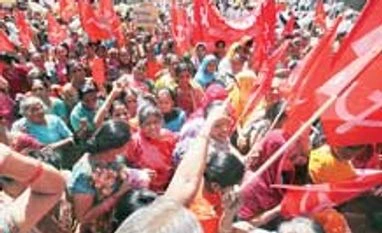 "Declining trend: Trade unions that filed returns hit a record low in 2019")












 Connect with us on WhatsApp