Conflicting trends in the steel industry make it hard for investors to take definitive calls. The world’s largest steel producer, China, is also the world’s largest exporter. Due to its weak macroeconomy and in particular, the weak real estate sector, China has large surplus steel production, and it has flooded markets with cheap exports.
In India, domestic steel demand is growing steadily. But prices are low due to the overhang of imports, despite measures to protect domestic industry such as import duties, including safeguard duties (which have ended but may be reimposed) and anti-dumping duties, and also non-tariff barriers like stringent QCOs (quality control orders).
QCOs, which cover as many as 160 imported steel products, create bottlenecks for downstream industries that depend on imports for special steels which are not made domestically. Niti Aayog has recommended the removal or easing of QCOs on 112 steel products.
Domestic demand is strong. Joint Plant Committee (JPC) data indicates domestic finished steel consumption grew 7.8 per cent year-on-year (Y-o-Y) to 92.5 million tonnes or MT during Apr-Oct’25. The volume of demand could rise 9 per cent in the calendar year 2025 (CY25), and another 9 per cent in CY26.
A 12 per cent provisional safeguard duty was imposed for 200 days starting April 21, 2025, and it has ended.
But the government is likely to extend it by three years and has also imposed anti-dumping duty for five years on hot rolled flats from Vietnam. Despite this, spot domestic HRC, CRC and rebar prices have all softened by between 1.5-5 per cent while still being at a premium to Chinese imports post expiry of safeguard duty.
The Q3FY26 would be impacted by softer steel prices. But rising demand in Q4 could help stabilise prices. Indian steelmakers will not have problems generating volume but realisations may be at risk. The keys to thriving in this environment will include wide footprints, raw material integration, low leverage, and tight working capital controls.
The Q3FY26 till date average international iron ore prices at $105 per ton are higher by 2.0 per cent Y-o-Y and 3.2 per cent Q-o-Q, and coking coal futures are higher Q-o-Q (but lower Y-o-Y).
Chinese operating profit spreads are likely negative. Chinese crude steel production of 486.4 mt during Apr’25-Sept’25 has declined 4.3 per cent Y-o-Y and further production cuts would shore up global prices.
India’s Q3FY26 till date average domestic steel HRC prices at ₹47,671 per ton is lower by 3.7 per cent Q-o-Q and flat Y-o-Y.
Spot domestic HRC price is at 5.9 per cent premium to Chinese import parity prices (excluding the provisional safeguard duty).
The proposed extension of safeguard duty coupled with strong domestic demand could help protect local producers.
Tata Steel and Jindal Steel both have partial internal supply of coking coal and are thus insulated to some extent from rising coking coal prices, which are up 5 per cent Q-o-Q but down 5 per cent Y-o-Y. Tata Steel also sources all its iron ore internally.
Management commentary across the industry is positive on demand in H2FY26 and expects pricing to improve from Nov-Dec 2025. Investors will have to be patient and prepared to ride out cyclical volatility in the short-term.


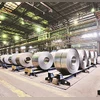 "Steel prices may stabilise in Q4FY26 as demand rises despite imports")









