Home / Opinion / Columns / Ironies of history: Vandemataram debate may throw up uncomfortable truths
Ironies of history: Vandemataram debate may throw up uncomfortable truths
What has come with the territory are the celebrations of 150 years of the composition of Vandemataram, which Parliament is expected to "debate" next week
4 min read Last Updated : Dec 05 2025 | 11:07 PM IST
History, with all its vagaries, can be unkind. Marxists tenaciously clung to the belief that “history is behind us. We are destined to win”. Competing world views, and also overlapping ones, were seen to be at lower stages of historical progress. One reason for Hitler’s coming to power was the stubbornly irreconcilable positions taken by the Social Democrats and communists. But was it history that took revenge on the communists in 1991, when Leningrad was renamed St Petersburg?
As we know from E H Carr (What is History?), history is a dialogue between the present and the past. In India too, it is being dredged up in a manner that makes the present seem substantially unflattering. At the current moment, two historical matters, neatly overlaid, are abroad. On the one hand it is being said, even at the cost of repetition and with reference to the educational minutes of Thomas Babington Macaulay in 1835, the nation must come out of the “slave mentality” brought about by British rule (Business Standard, November 26). What has come with the territory are the celebrations of 150 years of the composition of Vandemataram, which Parliament is expected to “debate” next week.
The expression “slave mentality” too can be debated. Is the mentality of a slave necessarily obsequious, which is perhaps implied here? The career of Josiah Henson, the slave who escaped the clutches of the people who believed slavery found acceptance in the Bible, would be at variance with this position. So would be the story of George Harris, the character in Uncle Tom’s Cabin who quoted from the Declaration of Independence to assert his freedom. And if juxtaposed with the “Dalit mentality” or “peasant-worker mentality”, both with an institutional frame, the term “slave mentality” would have much to commend itself.
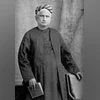
Leaving aside the disputations around the mentalities of the subjugated and the oppressed, if we turn to the “mentality” created by the minutes of Macaulay, meaning an outlook that is nothing but servile allegiance to India’s colonisers after 1757, it is at once palpable that it is no longer the oppressed who are paying obeisance to the new masters. They are a new middle class, mostly beneficiaries of the land-settlement policies of the British, getting jobs in government and related institutions. Bankim Chandra Chatterjee, deputy magistrate and deputy collector, was one such person in the new social milieu. No doubt a brilliant mind with a thorough knowledge of his job, only he could compose Vandemataram, which occurs in his novel Ananadamath (the Abbey of Bliss, published in 1884), which had several disparaging remarks about what is now India’s largest minority. If this ties in well with a thesis popular now, what comes at the end of the novel is an affront to the spirit of Vandemataram. The British are being seen as deliverers of Hinduism and positive players in the “recovery of the Sanatan dharma”, that is Sanatan dharma in the positive sense of the word. Worshipping multiple gods (330 million) is not that, Mahapurush tells Satyananda, the man who fought the mlechchas — the Muslims and the British. “Who is the enemy? There is no enemy now. Give up this fight. The British are our friendly rulers.” He holds the hand of Satyananda, who then sees a vision, a vision of union — the union of wisdom and devotion, and the union of faith and service. The novel ends here. And history has played its trick. Beating the demon of Macaulay with the brush of the melodious Vandemataram can run into stony terrain. Bankim’s own writing bears testimony to it and much else that might injure the view of a composite Hindu society. He considered the “Doms and Dosads” outside the fold of Hinduism (Evidence: Rajsingha, a novel). In the same work, what he wrote of the marriage practices of the Odiyas cannot be too pleasing to the people of West Bengal’s neighbouring state.
Like justice, history is blind. Unlike justice, it is not even-handed. In the words of the great scholar Michael Oakeshott, “History is ‘made’ by nobody save the historian: To write history is the only way of making it.” This is tolerable if there is a method in it. Discomfort arises when the elbow room of the historian is stretched too far.
Disclaimer: These are personal views of the writer. They do not necessarily reflect the opinion of www.business-standard.com or the Business Standard newspaper




