Big cats vs development

Conservation policies need to adjust for this conflict
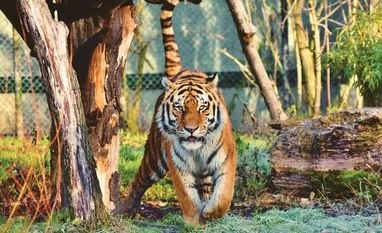
tiger
Photo: Pexels
Business Standard Editorial Comment
3 min read Last Updated : Apr 18 2023 | 10:36 PM IST
Barely a week after the government published data showing that India has 3,167 tigers in the wild, up by 200 over the past four years, reports appeared of leopards in Uttarakhand and the African cheetah in Kuno National Park straying into inhabited areas. Neither incident has resulted in the usual havoc of attacks on livestock or humans yet, but these threats persist, requiring the animals to be tranquilised and brought back into the protected area or shot. This reality suggests that the justified pride in the successes of the 50-year-old Project Tiger, which saved the big cat from extinction, needs to be tempered by the threats of man-animal conflicts, which urgently demand a fresh look at conservation strategies and policies.

Much has been made of the fact that India, with its high population density, has managed to set up and maintain 54 tiger reserves with reasonable success. But the problem of rising big cat populations is exemplified by Oban, the African cheetah who has strayed twice from Kuno. Theoretically, Kuno, with its area of 748 square km, has sufficient territory for the eight imported cheetahs to coexist. The problem is that animals, including big cats, cannot be depended upon to stay within the borders of sanctuaries demarcated by humans. This is true not only of tigers and leopards, but also of lions, bears, elephants and monkeys. This is one dimension of the issue. The other is that growing tiger populations constrict the room for other tigers or leopards, all of which are intensely territorial and compete for the same prey. Tigers typically need 15-20 square km of territory. As their population grows, younger tigers need to migrate to newer pastures, just like other myriad species in a jungle. This in turn makes it imperative for protected areas to be linked by corridors — strips of natural habitat — through which tigers and other animals can migrate to new territory to breed and feed. Without that, sanctuaries imprisoned within human habitation will lose the biodiversity needed to thrive.

The shrinking population of wild lions of the Gir forest is an example of the predicament of diminishing genetic viability. Leopards, meanwhile, are hardy, adaptable cats that are increasingly co-opting urban areas bordering forests, such as Mumbai, Dehradun and Gurugram, into their territory.  Wildlife corridors are not explicitly defined under the law, although they can be protected under forest protection rules and guidelines. However, India’s aggressive developmental thrust poses a constant danger to these jungle bridges. Land is constantly being requisitioned for networks of railways, roads, electricity lines, and mines for coal and other minerals. In 2019, the National Tiger Conservation Authority mapped out 32 major tiger corridors, suggesting some degree of protection to these landscapes. But the government’s move to weaken Environmental Impact Assessment (EIA) leaves them vulnerable to developmental priorities.

After receiving over 2 million objections to the EIA 2020, the government allowed it to expire but has introduced through a raft of office orders or memorandums some of its more undesirable elements, including waiving environmental approval and forest clearance for “critical infrastructure projects” in Maoist-hit and border areas. Such weakening of environmental laws is unlikely to help in the long run — either in preserving the big cat or securing the buy-in of local populations, which is critical to conservation projects.    

One subscription. Two world-class reads.

Already subscribed? Log in

Subscribe to read the full story →
*Subscribe to Business Standard digital and get complimentary access to The New York Times

Smart Quarterly

₹900

3 Months

₹300/Month

SAVE 25%

Smart Essential

₹2,700

1 Year

₹225/Month

SAVE 46%
*Complimentary New York Times access for the 2nd year will be given after 12 months

Super Saver

₹3,900

2 Years

₹162/Month

Subscribe

Renews automatically, cancel anytime

Here’s what’s included in our digital subscription plans

Exclusive premium stories online

  • Over 30 premium stories daily, handpicked by our editors

Complimentary Access to The New York Times

  • News, Games, Cooking, Audio, Wirecutter & The Athletic

Business Standard Epaper

  • Digital replica of our daily newspaper — with options to read, save, and share

Curated Newsletters

  • Insights on markets, finance, politics, tech, and more delivered to your inbox

Market Analysis & Investment Insights

  • In-depth market analysis & insights with access to The Smart Investor

Archives

  • Repository of articles and publications dating back to 1997

Ad-free Reading

  • Uninterrupted reading experience with no advertisements

Seamless Access Across All Devices

  • Access Business Standard across devices — mobile, tablet, or PC, via web or app

Topics :Tigersnational parkLeopardBusiness Standard Editorial Comment

Next Story



