Himalayan blunders

The fact that the Himalayas are also a zone of high seismic activity adds to the instability and unpredictability of this phenomenon
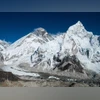
Himalayan glaciers
Himalayan glaciers (Photo: Wikimedia Commons)
Business Standard Editorial Comment
3 min read Last Updated : Sep 01 2026 | 9:44 PM IST
The world received its loudest warnings about global warming these past few summers with wildfires in the United States (US), record-breaking heat in Europe, and now the tragedy of  a yet another glacial lake outburst flood (GLOF) on the Nepal-Tibet border. The torrent of glacial debris that cascaded into the Bhotekoshi and Trishuli rivers resulted in over 1,000 deaths and more than 4,000 missing —among them Indians on the Kailash-Mansarovar pilgrimage and at an immigration centre located in the path of the flash flood. Nearly 12 per cent of Nepal’s hydroelectric generation has been incapacitated. GLOF-related tragedies have become increasingly frequent in the Himalayas, demanding a structured and cooperative response from the countries most impacted by this phenomenon — India, Nepal, Bhutan, China and Pakistan. 
GLOFs are formed by a combination of the long-term forces of climate change interacting with local weather phenomena. Himalayan glaciers are melting at an accelerated pace, creating lakes in the friable rocks of these young fold mountains. As more meltwater fills these unstable lakes and monsoon rain adds to the pressures, these water bodies burst their banks and hurtle down the mountains at warp speed, carrying a deadly cargo of water, mud, ice, boulders and rocks. The fact that the Himalayas are also a zone of high seismic activity adds to the instability and unpredictability of this phenomenon. GLOFs of varying degrees of intensity have caused death and destruction in 2025, also along the Bhotekoshi river and in Dharali in Uttarakhand; in 2023 in Sikkim, destroying an ill-planned dam along the Teesta river; and in 2021 along the Rishi Ganga, badly damaging two hydropower projects. More than a decade before this, the 2013 flash floods in Kedarnath, where more than 5,000 people died at the height of the Char Dham pilgrimage season, offered a salutary warning of the dangers of over-construction and over-tourism in this fragile mountain terrain. Roads and tunnels unscientifically slashed into rock faces without regard for durability, hydropower projects located in steep upper river valleys in unsustainable terrain, and the proliferation of guest houses, hotels and dhabas on riverbanks to serve expanding numbers of religious pilgrims who can access these high-altitude temples with greater ease have amplified the human toll from these climate events. But lessons from these disasters are yet to be assimilated by local or federal governing establishments. 
The Himalayas and the rivers that originate from it are critical for the livelihoods of millions of people within the Tibetan-South Asia geographies. While accurately predicting GLOF events is still extremely difficult, satellite and computer modelling can track changes in size and offer an early warning system of sorts. But the international collaboration that could make this system genuinely effective remains elusive.  The Nepal-based International Centre for Integrated Mountain Development, which attempts to collate and share data from countries across the Hindu Kush-Himalayan system, is hampered by political tensions among member nations that make meaningful data-sharing challenging. India, with 11 states and two Union Territories bordering the Himalayas, remains uniquely vulnerable to the region’s changing ecology. Developing robust monitoring capabilities here and making hard decisions to limit development and tourism infrastructure would be useful first steps in saving its people from the worst consequences of climate change.
   

One subscription. Two world-class reads.

Already subscribed? Log in

Subscribe to read the full story →
*Subscribe to Business Standard digital and get complimentary access to The New York Times

Smart Quarterly

₹900

3 Months

₹300/Month

SAVE 25%

Smart Essential

₹2,700

1 Year

₹225/Month

SAVE 46%
*Complimentary New York Times access for the 2nd year will be given after 12 months

Super Saver

₹3,900

2 Years

₹162/Month

Subscribe

Renews automatically, cancel anytime

Here’s what’s included in our digital subscription plans

Exclusive premium stories online

  • Premium stories handpicked daily by our editors

Complimentary Access to The New York Times

  • News, Games, Cooking, Audio, Wirecutter & The Athletic

Business Standard Epaper

  • Digital replica of our daily newspaper — with options to read, save, and share

Curated Newsletters

  • Insights on markets, finance, politics, tech, and more delivered to your inbox

Market Analysis & Investment Insights

  • In-depth market analysis & insights with access to The Smart Investor

Archives

  • Repository of articles and publications dating back to 1997

Ad-free Reading

  • Uninterrupted reading experience with no advertisements

Seamless Access Across All Devices

  • Access Business Standard across devices — mobile, tablet, or PC, via web or app

Topics :BS OpinionBusiness Standard Editorial CommenthydropowerHimalayas

First Published: Sep 01 2026 | 9:44 PM IST

Next Story


