Managing the rivers

Delhi floods show need for investment and preparation
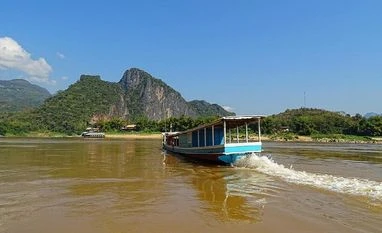
Mekong River (Photo: Wikimedia commons)
Business Standard Editorial Comment Mumbai
3 min read Last Updated : Jul 23 2023 | 9:59 PM IST
The recent flooding in Delhi deserves careful investigation. Areas that had never before been flooded — even during periods of considerably heavier rainfall than has been the case this year — saw extensive property damage due to waterlogging. How did this come about? The government of Delhi has blamed the government of the neighbouring state of Haryana, and there appears to be some justification in this complaint. The Hathnikund barrage on the Yamuna, the upstream of where it flows through Delhi, is controlled by the Haryana government, and the decision was taken to release 350,000 cusecs of water after heavy rain further north. This water should have flowed through the three more barrages on the section of the river that adjoins Delhi, and through to Uttar Pradesh. But, it appears several gates of one of the three barrages — the ITO barrage, which is also operated by the Haryana government — had been silted up and could not be opened. As a consequence, the water spread out into various areas of the city that are normally not subject to such severe flooding. The Haryana government’s only response to this accusation has been to point out that Haryana also suffered from floods.

Once again, as with the apparently intractable problem of air pollution, the existence of multiple authorities with responsibilities for Delhi and its environs has caused a disaster for its people. Preparedness for floods has undoubtedly suffered, and so has establishing proper accountability for errors. There are, however, additional questions to be asked. The 350,000 cusecs of water took some time to travel downstream as far as Delhi — no alarm was raised or emergency preparations made. While many areas that were flooded on this occasion were long settled, others have been built on the floodplains of the Yamuna and are dangerously prone to flooding and to subsidence. The spread of concrete in built-up parts of the city with no regard to the ability of the earth to soak up excess water might also be a problem.

Overall, however, the fact of urban development is not so much the problem as is the quality of urbanism and its administration. Solutions must be found, for the growth of Delhi can hardly be stopped. The possibility of subsuming barrages along the Yamuna and other major rivers under one integrated authority should be examined. State governments can, as constitutionally mandated, retain their authority over the flow of water through their territory; but they clearly need assistance in maintaining and managing riverine infrastructure. The Union government should commission a broader examination of the Yamuna flood plan to ensure that building and infrastructure development are created in such a way that excess water is harvested, absorbed, or allowed to flow downstream. Finally, additional infrastructure — new channels, de-sedimentation facilities, and firmer embankments — needs to be planned to enable the identification of storm surges and their diversion in a timely manner. The Yamuna can neither be ignored nor avoided. Nor can other major Indian rivers. As India’s megacities grow, better ways of dealing with flash floods — increasingly common in the era of global warming — must be developed.

One subscription. Two world-class reads.

Already subscribed? Log in

Subscribe to read the full story →
*Subscribe to Business Standard digital and get complimentary access to The New York Times

Smart Quarterly

₹900

3 Months

₹300/Month

SAVE 25%

Smart Essential

₹2,700

1 Year

₹225/Month

SAVE 46%
*Complimentary New York Times access for the 2nd year will be given after 12 months

Super Saver

₹3,900

2 Years

₹162/Month

Subscribe

Renews automatically, cancel anytime

Here’s what’s included in our digital subscription plans

Exclusive premium stories online

  • Over 30 premium stories daily, handpicked by our editors

Complimentary Access to The New York Times

  • News, Games, Cooking, Audio, Wirecutter & The Athletic

Business Standard Epaper

  • Digital replica of our daily newspaper — with options to read, save, and share

Curated Newsletters

  • Insights on markets, finance, politics, tech, and more delivered to your inbox

Market Analysis & Investment Insights

  • In-depth market analysis & insights with access to The Smart Investor

Archives

  • Repository of articles and publications dating back to 1997

Ad-free Reading

  • Uninterrupted reading experience with no advertisements

Seamless Access Across All Devices

  • Access Business Standard across devices — mobile, tablet, or PC, via web or app

Topics :Business Standard Editorial CommentFloods in India

Next Story



