Overcapacity effects: Steel sector leads demand for protection from China

Steel producers have petitioned the government that their capacity expansion will be under threat unless prices, and therefore margins, are supported through tariffs
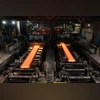
Steel, Steel plant
Photo: Bloomberg
Business Standard Editorial Comment Mumbai
3 min read Last Updated : Sep 10 2024 | 10:21 PM IST
For almost a decade, economists have been advising the Government of China to “rebalance” its economy away from investment towards consumption. What can be judged of the Chinese economy suggests either that a process of rebalancing is indeed under way, or that the hazards that rebalancing was meant to avoid have finally caught up. Productivity is undergoing a transition; real estate demand and construction demand have slackened; it looks like household savings will decline and consumption patterns will shift. The purchasing managers’ index (manufacturing) has read below 50 for multiple recent months. The size and power of the Chinese economy have now reached a level where this has affected multiple sectors, particularly those linked to the commodity markets. Commodities are down across the board in the year to date.

West Texas Intermediate crude oil is more than 5 per cent cheaper than in the beginning of the year, and natural gas is more than 12 per cent down. Iron ore, significantly, is more than a third cheaper since the beginning of 2024 — which has put pressure on steel prices, also more than a quarter cheaper on the Shanghai markets than they were on January 1. Interestingly, copper — long considered the bellwether metal for an economic expansion — has gone in the opposite direction, and is up by 6.3 per cent year to date. One other contrary piece of data is of natural gas futures, which hit the bottom in late 2023 and have been climbing since. Some parts of the disaggregated coal market are also showing firmer price signals than oil and gas markets.

In India, the sector most directly affected by this shift in the commodity markets is steel. India is now the world’s second-largest steel producer, and there are major plans for expansion to 2030. Current production is over 120 million tonnes (mt); the government has sought to increase this to 300 mt by 2030. That would involve exporting at least about 100 mt, since various optimistic estimates of demand are that it will only increase to 190 mt. Several private players share the government’s enthusiasm about capacity addition: Tata Steel, for example, intends to double output from its India plants by 2030. This optimism has now run headlong into the turbulence caused by the China slowdown. Most large Indian producers of steel have captive iron ore mines, so any softening in the prices of that input does not help them. They do still have to buy both thermal and coking coal; the price of either of these has not dropped as much as the price of finished steel. Meanwhile, excess supply in China means it is flooding the global market.

This has naturally led the steel sector to ask for tariff protection. As yet imports are not particularly high, and so there is no threat to these companies. While Tata Steel, for example, has seen share prices slide since May, when it reported a 64 per cent plunge in profits, its share price is still up handsomely since the beginning of the year. But steel producers have petitioned the government that their capacity expansion will be under threat unless prices, and therefore margins, are supported through tariffs. The government must recognise that more such demands for protection will arise as the effects of Chinese overcapacity ripple through the globe. It must not encourage rent-seeking, but also must recognise the unusual circumstances that underlie this shift in the markets.

One subscription. Two world-class reads.

Already subscribed? Log in

Subscribe to read the full story →
*Subscribe to Business Standard digital and get complimentary access to The New York Times

Smart Quarterly

₹900

3 Months

₹300/Month

SAVE 25%

Smart Essential

₹2,700

1 Year

₹225/Month

SAVE 46%
*Complimentary New York Times access for the 2nd year will be given after 12 months

Super Saver

₹3,900

2 Years

₹162/Month

Subscribe

Renews automatically, cancel anytime

Here’s what’s included in our digital subscription plans

Exclusive premium stories online

  • Over 30 premium stories daily, handpicked by our editors

Complimentary Access to The New York Times

  • News, Games, Cooking, Audio, Wirecutter & The Athletic

Business Standard Epaper

  • Digital replica of our daily newspaper — with options to read, save, and share

Curated Newsletters

  • Insights on markets, finance, politics, tech, and more delivered to your inbox

Market Analysis & Investment Insights

  • In-depth market analysis & insights with access to The Smart Investor

Archives

  • Repository of articles and publications dating back to 1997

Ad-free Reading

  • Uninterrupted reading experience with no advertisements

Seamless Access Across All Devices

  • Access Business Standard across devices — mobile, tablet, or PC, via web or app

Topics :Business Standard Editorial CommentBS OpinionSteel sectormanufacturing

Next Story



