Russian President Vladimir Putin’s first visit to India since the beginning of the Ukraine war was high on optics. The visit demonstrated the durability of a relationship that has endured shifting geopolitical landscapes, including the current one, in which both countries are under pressure from Western nations. Prime Minister Narendra Modi’s red-carpet welcome and conspicuous bonhomie on the ride back to his residence, plus a presidential banquet, certainly underlined the stable nature of the partnership. The bigger question, perhaps, is whether the diplomatic choreography translated into hard gains.
At a time when Mr Putin is being shunned by the West, and his country is under escalating economic sanctions and in the throes of intricate peace talks over Ukraine, the hearty welcome from a consequential Asian power comes as a personal booster. For India, facing difficulties in relations with the United States (US) with punitive tariffs as a result of its decision to buy Russian oil, the visit signalled an assertion of its strategic autonomy in global affairs. Mr Modi’s statement that India was not neutral but on the side of peace, perhaps an oblique critique of Mr Putin’s action in Ukraine, his invitation to Ukrainian President Volodymyr Zelenskyy to visit India, and the invitation to the top leadership of the European Union as chief guests for Republic Day celebrations, underline this message. But the efficacy of this signalling is still to be tested fully. For one, a trade deal with the US is still to materialise. This, even as the Trump administration continues negotiations with China despite its deeper economic ties with Russia. For another, India’s position in the Indo-Pacific appears to have weakened with US President Donald Trump cancelling plans to visit India, which was to have hosted the four-nation Quad summit this year.
It is also an open question whether any of India’s immediate objectives were met, although there was an abundance of promise mostly built on Mr Modi’s visit to Moscow last year. Among them was the adoption of Programme 2030 to expand bilateral trade to $100 billion, continue negotiations on the five-member Eurasian Economic Union, Mr Putin’s riposte to the European Union, and steps to enable trade using national currencies and digital payments. The visit yielded a raft of cooperation agreements in trade, transport, and civil nuclear deals — significant given Russia’s expertise in small modular reactors. Also consequential from India’s point of view was a “labour mobility agreement”, which will enable the transfer of skilled Indian labour to Russia to meet an expected manpower shortage of three million jobs by the end of the decade.
However, no defence deal materialised. There was no mention of India’s request for additional squadrons of the Russian S-400 air defence system, nor of a deal to buy the fifth-generation Sukhoi SU-57 stealth fighters, which the Indian Air Force had hoped would fill critical capability gaps. On access to spares and components for existing defence equipment, a longstanding pain point for India, a joint statement agreed to encourage joint manufacturing in India. Though India must draw encouragement from the fact that the outcomes of this meeting did not raise major protests from the West, the weeks ahead will prove a testing time.

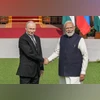 "Putin's red-carpet visit: Strong optics but uncertain strategic gains")









