United Kingdom Prime Minister Keir Starmer hosted a large number of European leaders — as well as his Canadian equivalent — at Lancaster House, London, over the weekend to discuss a path forward for Europe on the Ukrainian crisis. This summit increased in importance after the public, televised breakdown of talks between Ukrainian President Volodymyr Zelenskyy and American President Donald Trump in the Oval Office last week. Mr Trump refused to grant Ukraine any security guarantees. The agenda before Europe’s leaders was to ensure that this did not represent the end of Western support for Ukraine, and that the United States did not come to a separate agreement with the Russian Federation that did not involve the Ukrainians or their representatives. These aims were only partially met. The European leaders committed themselves to continuing their support to Ukraine in the current war and to ensuring it could rearm itself as and when a ceasefire was declared. Although they also promised to ensure that Ukraine would be at the table during peace negotiations, the summit underlined the degree to which neither they nor Mr Zelenskyy is in control of the situation. The most urgent requirement for Europe will unquestionably be to ensure that Mr Zelenskyy can somehow repair his relationship with Mr Trump in such a way that US support continues, even if not as wholeheartedly as before.
After a slow start, Europe now provides about half the military support Ukraine receives. But this understates the degree of American centrality to Ukraine’s war effort. Long-range platforms and some air support hardware are provided only by the US. In addition, command and control systems, as well as the Starlink internet service, are dependent on the Americans. Europe can hardly replace these on short notice, no matter how much it tries. If anything, what is being shown up at this time is Europe’s continued inability to mount a common defence. There are too many different and competing national systems; the control and integration is too often left to the Americans; and the local industrial base is geared towards quality and not quantity and cannot be easily repurposed. These are severe problems to be overcome if the continent is to rearm.
Yet it appears that Mr Trump has in a way done the Europeans a favour. They have been forced to a position where they may take tough decisions that otherwise would probably have been postponed. Defence budgets will unquestionably increase — many European defence stocks increased by more than 10 per cent when trading opened on Monday morning. Hard questions will be asked about the nuclear deterrent too. If the US cannot be relied on, and the UK’s Trident system is too integrated with the US’ nuclear command, then can the French nuclear umbrella cover all of Europe? From an Indian point of view, a Europe that is more determined as well as less confident about its place in the US’ shadow is a partner worth cultivating. The good atmospherics surrounding the visit of the European Commission President to New Delhi last week are a reminder that India is a stable partner for the European Union in a turbulent world. This is a time to make and receive concessions, and to lock in partnerships of mutual benefit. It may be too late for this war, but there is less doubt now that Europe will attempt to integrate and emerge as a strategic force in the next decade.

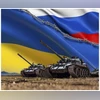 "Rising to a crisis: Europe moves towards a stronger security identity")











