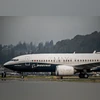
The Directorate General of Civil Aviation (DGCA), the regulatory body in India handling primarily aviation safety, should urgently look into the software glitch that Boeing reportedly identified recently in certain 737 MAX flight computers. In India, Air India Express and Akasa Air fly 96 Boeing 737 MAX planes, out of more than 800 aircraft of all types operated by Indian airlines. The DGCA is yet to give any status update on the software glitch that may have been found in the aircraft concerned. Akasa, which is the latest entrant in aviation and operates only 737 MAX (43 of them), said in a statement that it was coordinating with Boeing and that there was no impact on the safety of its operations. Air India Express, the low-cost brand of Air India, which manages 53 of these jets, has not commented on the matter so far.
According to media reports, Boeing detected a software issue in some 737 aircraft. It could result in disengagement of the automated flight-guidance system after a missed landing approach or during an aborted landing. This situation can be triggered if pilots alter the original approach path, aviation analysts have noted. In the case of such a scenario, pilots will have to temporarily revert to manual control. It is not clear as to how many aircraft have the flawed software. Even as the Washington DC-headquartered Federal Aviation Administration is investigating the issue through a corrective action review board (CARB) and has deferred certification to the upcoming variants of 737 MAX, the Indian authorities must act promptly based on the inputs from the global counterparts. Boeing has been under severe scrutiny over safety concerns related to 737 MAX since two fatal crashes in 2018 and 2019. Lion Air Flight 610 crashed into the Java Sea soon after takeoff in October 2018, and in March 2019, Ethiopian Airlines 302 crashed after takeoff, resulting in the worldwide grounding of Boeing 737 Max planes for more than a year. Based on these incidents, there have been allegations of cost-cutting and cover-ups at Boeing.
The latest software glitch is a global problem and several foreign airlines have told Boeing that they would reject any new aircraft fitted with the same version of the software. The Indian carriers should also proactively take an informed stand. The pilots’ association must also look into the safety hazards involving such a glitch. It’s been more than 15 months since the Air India crash in Ahmedabad, killing all passengers barring one, and there’s no closure yet on the cause of the accident. Air India was flying a Boeing Dreamliner to London Gatwick. More recently, an Air India flight — Airbus A320neo — experienced a sudden altitude drop at 36,000 feet while flying Phuket-Delhi. Although a pilot on that flight was suspended after testing positive for marijuana, the failure of all three hydraulic systems was also detected. The final investigation report is not out yet. Against that backdrop, it’s time for the regulator to assess the risk in the 737 MAX case and act in the right earnest. This is critical, especially as Boeing has reportedly said it informed all 737 operators last month itself about the software issue, which could disable the automated flight-guidance system during a case of specific landing.

 "Safe landing")












 Connect with us on WhatsApp