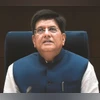
Commerce and Industry Minister Piyush Goyal has met European Commissioner for Trade Maros Sefcovic in Brussels, their second meeting within a month, to discuss the proposed free trade agreement (FTA), currently under negotiation between the two regions.
Goyal travelled to Brussels on May 23 from Washington, while India's chief negotiator L Satya Srinivas and his team are already at the EU headquarters for the FTA negotiations.
The Indian minister held meetings with his EU counterpart earlier this month.
"Delighted to welcome my friend and counterpart @PiyushGoyal. We continue to make progress. Let's maintain the momentum - with hard work, clear focus - and I look forward to our next meeting soon," Sefcovic said in a post on X.
In response, Goyal, in a post on the social media platform, said, "We remain committed to the shared prosperity of India and the EU. Let us keep this pace going!".
These deliberations assume significance as India and the 27-nation European Union are looking at concluding the talks for an early harvest trade agreement by July.
The early harvest or an interim trade agreement could include issues like intellectual property rights (IPRs), government procurement, tariffs, and non-tariff barriers.
Officials of both sides recently concluded the eleventh round of talks on May 16 here in the national capital.
"We are looking for an early harvest. We are trying to do it as early as possible," an official has said recently.
The two sides have agreed to conclude the agreement in two phases on account of the uncertain global trade environment, particularly due to the US tariff actions under President Donald Trump.
India has followed the practice of negotiating trade pacts in two phases with Australia.
The early harvest pact would lead to a full-fledged free trade agreement.
Besides demanding significant duty cuts in automobiles and medical devices, the EU wants tax reduction in products like wines, spirits, meat, poultry and a strong intellectual property regime.
Indian goods exports to the EU, such as ready-made garments, pharmaceuticals, steel, petroleum products, and electrical machinery, can become more competitive if the pact is concluded successfully.
In June 2022, India and the 27-nation EU bloc resumed negotiations for a comprehensive free trade agreement, an investment protection agreement and a pact on geographical indications (GIs) after a gap of over eight years.
The negotiations stalled in 2013 due to differences over the level of opening up of the markets.
On February 28, Prime Minister Narendra Modi and the European Commission President agreed to seal a much-awaited free trade deal by the end of this year.
The India-EU trade pact negotiations cover 23 policy areas or chapters, including Trade in Goods, Trade in Services, Investment, Sanitary and Phytosanitary Measures, Technical Barriers to Trade, Trade Remedies, Rules of Origin, Customs and Trade Facilitation, Competition, Trade Defence, Government Procurement, Dispute Settlement, Intellectual Property Rights, Geographical Indications, and Sustainable Development.
India's bilateral trade in goods with the EU was USD 137.41 billion in 2023-24 (exports worth USD 75.92 billion and imports worth USD 61.48 billion), making it the largest trading partner for goods.
The EU market accounts for about 17 per cent of India's total exports, while the EU's exports to India make up 9 per cent of its total overseas shipments.
In addition, the bilateral trade in services, in 2023, between India and the EU was estimated at USD 51.45 billion.

 "India, EU push for early harvest trade pact amid ongoing FTA talks")


 Connect with us on WhatsApp