
7 Hong Kong activists fail to overturn convictions over 2019 protest
The Beijing and Hong Kong governments said the security law was necessary to bring back stability to the city following the protests
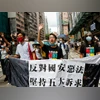 "7 Hong Kong activists fail to overturn convictions over 2019 protest")
Explore Business Standard

Associate Sponsors
Co-sponsor
The Beijing and Hong Kong governments said the security law was necessary to bring back stability to the city following the protests
Seven of Hong Kong's most prominent pro-democracy activists lost their final bid to overturn their convictions at the city's top court on Monday over their roles in one of the biggest anti-government protests in 2019.
Jimmy Lai, founder of the now-defunct Apple Daily newspaper; Martin Lee, the founding chairman of the city's Democratic Party; and five former pro-democracy lawmakers were found guilty in 2021 of organising and participating in an unauthorised assembly.
Their convictions dealt a blow to the city's flagging pro-democracy movement during a political crackdown on dissidents following the protests.
Last year, the activists partially won their appeal at a lower court, with their convictions quashed over the charge of organising an unauthorised assembly. But their convictions over taking part in the assembly were upheld and they continued their legal battle at the city's top court.
On Monday, judges at the Court of Final Appeal ruled against their appeal over the remaining convictions.
The convictions were linked to their involvement in a rally in August 2019 that drew an estimated 1.7 million people onto Hong Kong's streets to call for greater police accountability and democracy. The march was relatively peaceful compared to other protests that often morphed into violent clashes between police and protesters that year.
Hong Kong, a former British colony, returned to China in 1997. Its mini-constitution, the Basic Law, guarantees its people freedom of assembly.
When sentencing the seven activists in 2021, a judge at the District Court ruled that the right to such freedom is not absolute and is subject to restrictions ruled constitutional. She ordered Lai, Lee Cheuk-yan, Leung Kwok-hung and Cyd Ho to be jailed between eight and 18 months. Martin Lee, Margaret Ng and Albert Ho were given suspended jail sentences.
When the appellate court partially overturned their convictions in 2023, it quashed part of the sentences for the four who were given jail terms on the record. The decision was made after they already served out their sentences.
Lai, Lee Cheuk-yan, Leung and Albert Ho still remained in custody as they were also prosecuted or convicted under a Beijing-imposed national security law, which critics said has all but wiped out public dissent. Lai was also serving a prison term for a separate fraud case.
The Beijing and Hong Kong governments said the security law was necessary to bring back stability to the city following the protests.
The movement five years ago was the city's most concerted challenge to the Hong Kong government since the 1997 handover. It waned with massive arrests and exiles of democracy activists, the COVID-19 pandemic and the introduction of the security law.
(Only the headline and picture of this report may have been reworked by the Business Standard staff; the rest of the content is auto-generated from a syndicated feed.)
First Published: Aug 12 2024 | 9:35 AM IST

