
Attempts to arrest impeached South Korean Prez Yoon: All you need to know
Scuffles occurred Jan 3 when dozens of investigators were stopped from entering the compound by presidential security forces, military personnel and vehicle barricades
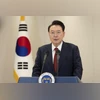 "Attempts to arrest impeached South Korean Prez Yoon: All you need to know")
Explore Business Standard

Associate Sponsors
Co-sponsor
Scuffles occurred Jan 3 when dozens of investigators were stopped from entering the compound by presidential security forces, military personnel and vehicle barricades
For weeks, impeached South Korean President Yoon Suk Yeol has holed up inside his guarded residential compound as investigators try to figure out how to detain him.
Scuffles occurred Jan 3 when dozens of investigators were stopped from entering the compound by presidential security forces, military personnel and vehicle barricades.
Since then, thousands of opponents and supporters have gathered daily in competing rallies near his official residence in Seoul, as the country's anti-corruption agency and police prepare another attempt to take the president into custody. One side demands Yoon's ouster and arrest, while the other vows to defend him.
Separated by police lines and fences, the two groups constantly exchange verbal insults across the divide. One person was arrested Sunday when he waved a box cutter in a heated argument, but no one was hurt.
Still, tensions are escalating. Yoon's lawyers have claimed that images of him being dragged out in handcuffs could trigger a huge backlash from his supporters and spark a civil war.
The spectacle at the compound follows Yoon's astonishing decision last month to impose martial law during a seemingly routine impasse with the opposition, which dominates parliament.
Here's a closer look at the impasse: What's the latest? The Corruption Investigation Office for High-Ranking Officials leads a joint investigation with police and the military examining whether Yoon's short-lived power grab amounted to an attempted rebellion. Yoon had ignored repeated requests by investigators to appear for questioning, and the agency obtained a new court warrant last week seeking his detainment.
On Monday, it said it warned the Defense Ministry that troops guarding the presidential residence could face criminal charges if they obstruct efforts to detain him.
The Defence Ministry has said the troops at the residence are under the control of the presidential security service. Kim Seon-ho, the acting defense minister, has said troops shouldn't be placed in a position where they might confront police.
The anti-corruption agency and police are debating more forceful measures to detain Yoon and have warned that presidential bodyguards who try to obstruct the execution of the warrant could be arrested on site. The presidential security service in recent days was seen fortifying the grounds of the presidential residence with barbed wire and barricades formed with rows of vehicles.
South Korea's acting leader, Deputy Prime Minister Choi Sang-mok, on Monday urged both the police and the presidential security service to stick to peaceful and restrained measures, citing growing concerns about a clash. The anti-corruption agency has expressed frustration that Choi hasn't instructed the presidential security service to stand down.
Choi on Friday accepted the resignation of the chief of the presidential security service, Park Jong-joon, who was questioned by police about the thwarted detention of Yoon on Jan. 3. Park said his duty is to protect the president and that the investigation should proceed in a manner appropriate for a president's status and the dignity of the nation.
What led to the standoff? Yoon called the imposition of martial law a necessary act of governance against a liberal opposition that has bogged down his agenda with its legislative majority. After declaring martial law, he dispatched troops to surround parliament, but lawmakers who managed to get past the blockade voted to reject it, and the Cabinet lifted his declaration hours later.
Parliament impeached Yoon on Dec. 14, and his presidential powers were suspended. The Constitutional Court has begun deliberations on whether to formally remove Yoon from office or reinstate him.
Yoon has vowed to fight to the end against efforts to oust him. Martial law lasted only a few hours, but the country's politics, diplomacy and financial markets have been shaken for weeks. The decree also exposed South Korea's deeply polarized society.
South Korean presidents have wide-ranging immunity from prosecution while in office, except for allegations of rebellion or treason.
If Yoon is detained, the anti-corruption agency will have 48 hours to either request a warrant for his formal arrest or release him. Yoon's defense minister, police chief and several top military commanders have already been arrested over their roles in the period of martial law.
(Only the headline and picture of this report may have been reworked by the Business Standard staff; the rest of the content is auto-generated from a syndicated feed.)
First Published: Jan 13 2025 | 2:50 PM IST

