
Biden administration weighing measures to help Palestinians bring families
Jean-Pierre said discussions were underway but had no further details on how procedures might work
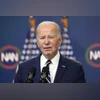 "Biden administration weighing measures to help Palestinians bring families")
WebinarsNew
Deep DiveNew
Explore Business Standard
Jean-Pierre said discussions were underway but had no further details on how procedures might work
The Biden administration is weighing measures to help Palestinians living in the United States who want to bring family from the war-torn region.
We are constantly evaluating policy proposals to further support Palestinians who are family members of American citizens and may want to come to the United States, White House press secretary Karine Jean-Pierre said Wednesday.
Jean-Pierre said discussions were underway but had no further details on how procedures might work. The new measures would help those who are legal permanent residents or US citizens and who have family in the region.
It's difficult right now for anyone to get out of the Gaza Strip as the Israel-Hamas war continues, and more than 34,000 Palestinians have been killed, according to local health officials, around two-thirds of them children and women.
The discussion comes as Prime Minister Benjamin Netanyahu has maintained that Israel will move forward with a major military operation in the southern Gaza city of Rafah even as the Biden administration has warned that such action would be catastrophic.
An estimated 1.5 million people more than half of Gaza have taken shelter in Rafah as the war shows no signs of ending.
If the US were to move forward with some sort of measure to help the families of Palestinians in the Gaza Strip, it would likely require coordination with Egypt. Early in the war, hundreds of Americans as well as other foreign nationals trapped in Gaza were able to escape via the Rafah border crossing with Egypt, which opened the crossing with some trepidation.
Egypt as well as other Arab nations worry that an Israeli offensive could lead to a displacement of Palestinians into Sinai, a scenario it views as unacceptable.
For Palestinians already in the US, the Biden administration has already agreed to what's known as deferred enforced departure, an authority used at a president's discretion.
The directive signed by Biden last month effectively allows Palestinian immigrants who would otherwise have to leave the United States to stay without the threat of deportation for at least 18 months.
(Only the headline and picture of this report may have been reworked by the Business Standard staff; the rest of the content is auto-generated from a syndicated feed.)
First Published: May 02 2024 | 8:21 AM IST

