
Brazil's Lula welcomes China's Xi for state visit as ties strengthen
The state visit by the Chinese leader comes more than a year after Lula visited China seeking to strengthen ties and mend relations with its biggest trade partner
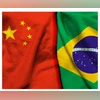 "Brazil's Lula welcomes China's Xi for state visit as ties strengthen")
Explore Business Standard

Associate Sponsors
Co-sponsor
The state visit by the Chinese leader comes more than a year after Lula visited China seeking to strengthen ties and mend relations with its biggest trade partner
Brazilian President Luiz Inacio Lula da Silva on Wednesday welcomed China's President Xi Jinping for a state visit at the Alvorada Palace in Brasilia, the latest sign of deepening ties between the two countries that analysts say may accelerate as Donald Trump returns to the White House in 2025.
China overtook the US as Brazil's biggest export market in 2009.
Since then, the links between the two nations have strengthened in trade and investment and on Wednesday the two leaders signed 37 agreements in areas ranging from trade and tourism to agriculture, industry, science and technology, health, energy, culture and education.
That reflects a broader trend, experts said. Last week, Xi inaugurated a $1.3 billion megaport in Peru, perhaps the clearest sign of Latin America's reorientation.
Latin America has always been forgotten by the United States and the European Union. Who fills that void? China, said Flavia Loss, an international relations professor at Foundation School of Sociology and Politics in Sao Paulo.
Donald Trump's election is already accelerating this proximity. We're clearly seeing it happening now, live, she added.
The state visit by the Chinese leader comes more than a year after Lula visited China seeking to strengthen ties and mend relations with its biggest trade partner after a rocky period under his predecessor, Jair Bolsonaro.
Bolsonaro's lawmaker son Eduardo blamed the Covid-19 pandemic on the Chinese Communist Party and referred to the giant Chinese technology company Huawei as Chinese espionage, prompting sharp rebukes. During eight months in 2022, China did not have an ambassador in Brazil.
Lula has taken an opposite stance. Repairing relations with China is also part of his strategy to replace Brazil on the international scene after a period of isolation under Bolsonaro who showed little interest in global affairs.
In remarks to journalists on Wednesday, Lula said that what China and Brazil do together reverberates around the world highlighting the collaboration of both countries within the United Nations and Brics group of developing nations.
Xi referred to China and Brazil as reliable friends with a shared destiny and positive forces to promote peace." From January to October 2024, trade between the countries amounted to $136.3 billion, according to a November 13 statement from Brazil's presidential palace.
Since 2004, when President Lula visited China for the first time, bilateral trade has grown more than 17 times. Exports to China were greater than the sum of our sales to the United States and the European Union, Eduardo Saboia, secretary for Asia and the Pacific at the ministry of foreign affairs, said in the statement.
China has been pressuring Brazil to join its Belt and Road Initiative, BRI, which started as a programne for Chinese companies to build transportation, energy and other infrastructure around the world.
While initially cautious, Brazil has considered the idea and is seeking partners in areas such as funds to limit human-caused climate change and finance adaptation measures, said Pedro Brites, an expert on China at the Getulio Vargas Foundation, a university and think tank in Sao Paulo.
But Brazil, as this state visit shows, has managed to seal good agreements with China without having joined, so I don't know if the gain is still worth it in Brazil's calculation, he added.
While Trump's return to the White House may accelerate the proximity between China and Brazil, adhering too much to Chinese leadership could come with a cost for the South American nation, causing rifts with Washington and European nations, said Brites.
Brazil will maintain its rapprochement and bargain to a certain extent, but I think there will be a limit, he added.
(Only the headline and picture of this report may have been reworked by the Business Standard staff; the rest of the content is auto-generated from a syndicated feed.)
First Published: Nov 21 2024 | 8:03 AM IST

