3 min read Last Updated : Jan 22 2026 | 11:32 PM IST
Campaigning began on Thursday for Bangladesh’s first national elections since the 2024 uprising that ousted longtime Prime Minister Sheikh Hasina.
The major political parties held campaign rallies in the capital, Dhaka, and elsewhere ahead of February 12 election, which is seen as the most consequential in Bangladesh’s history since Hasina’s ouster and is being held under an interim government, with voters also deciding on proposed political reforms.
The interim government led by Nobel Peace Prize laureate Muhammad Yunus has pledged to hold a free and fair election, but questions were raised after his administration banned Awami League, Hasina’s former ruling party. The Awami League and the Bangladesh Nationalist Party have historically dominated the country’s electorate.
There are also concerns about the country’s law and order situation, but the government says it will keep the voting peaceful.
Yunus assumed office three days after Hasina left the country for India on August 5, 2024, following protests that killed hundreds of people. The protests ended in a violent crackdown.
With the Awami League excluded from the election, a 10-party alliance led by Jamaat-e-Islami, an Islamist party, is seeking to expand its influence. Jamaat-e-Islami has long faced criticism for secular groups who say its positions challenge Bangladesh’s secular foundations. A new party formed by student activists has emerged.
National Citizen Party, or NCP, is also part of the alliance.
Tarique Rahman, BNP chairman and the son of former Prime Minister Khaleda Zia, is widely seen as a leading contender for prime minister. His party has drawn strong support rooted in the political legacy of his mother, who died last month. Rahman returned to Bangladesh last month after 17 years in exile in the United Kingdom.
Rahman is launching his campaign in the northwestern city of Sylhet with an address to a rally later on Thursday and is scheduled to visit several districts in the coming days.
Jamaat-e-Islami and the NCP are also campaigning in the capital, Dhaka.
The election will also include a referendum on a national charter, with the interim government seeking to campaign for voters to support what it describes as a new political course built on reforms. The charter was signed last year by 25 of the country’s 52 registered political parties. The Awami League opposed the idea, and several other parties objected to signing the document.
The July National Charter, named after the uprising that began in July 2024, is said to be the fall of Hasina, is currently nonbinding, but supporters say a referendum is needed to make it a part of the constitution.

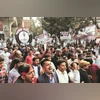 "Campaigning begins in Bangladesh for first polls after Hasina's ouster")


