
Cutting pollution to Covid level may stop glaciers from disappearing: Study
If emissions of air pollutants such as soot could be reduced to at least the level of the lockdowns, snowmelt could be reduced by up to half, they said
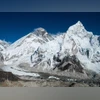 "Cutting pollution to Covid level may stop glaciers from disappearing: Study")
WebinarsNew
Deep DiveNew
Explore Business Standard
If emissions of air pollutants such as soot could be reduced to at least the level of the lockdowns, snowmelt could be reduced by up to half, they said
Reducing air pollution to levels similar to those during the Covid-19 pandemic could protect the Himalayan glaciers and prevent them from disappearing by the end of the century, a study by an international research team from India, Germany and the UK has found.
Analysing the situation during the Covid-19 lockdown in 2020, the team found that cleaner air during the period ensured that less soot was deposited on the glaciers, resulting in 0.5 to 1.5 milimeter (mm) less snow melting per day.
The rapid retreat of glaciers and the loss of snow cover already pose a threat to the sustainable water supply of billions of people in Asia who live in the catchment areas of rivers such as the Indus, Ganges and Yangtze, according the researchers.
If emissions of air pollutants such as soot could be reduced to at least the level of the lockdowns, snowmelt could be reduced by up to half, they said.
The study, published in the journal Atmospheric Chemistry and Physics, found that a switch to clean energy supplies and lower-emission modes of transport would therefore bring significant benefits for sustainable water supplies, agriculture and ecosystems in large parts of Asia.
The mountains of the Hindu Kush Himalayas (HKH) and the highlands of Tibet in Central Asia form the largest snow-covered region outside the poles.
The meltwater from these glaciers feeds rivers in India and China, which fuel agriculture, hydropower generation and the economies of these countries.
Model simulations for extreme scenarios show that the melting snow in the Himalayas could cause the glaciers there to disappear by the end of the 21st century.
The researchers noted that the economic slowdown caused by the lockdown measures during the coronavirus pandemic led to a drastic decline in passenger and freight transport, industrial emissions and energy consumption in this region in 2020.
As a result, air pollution with greenhouse gases and especially soot also decreased significantly, they said.
Satellite observations showed cleaner snow with almost a third less light-absorbing pollution during the lockdown in Asia between March and May 2020, the researchers said.
This led to a decrease in snowmelt of 25 to 70 mm in 2020compared to the 20-year average for the months of March to May in the western Himalayas, they said.
The changes in snow absorption and surface albedo thus ensured that around 7 cubic kilometers of meltwater remained in the Indus catchment area, according to the study.
The team used global simulations to analyse in detail the impact of reduced air pollution over high mountains in Central Asia during the Covid-19 lockdowns between March and May 2020.
"The aerosol optical thickness (AOD), i.e., the atmospheric opacity, over this region decreased by around 10 per cent in April 2020 compared to before the pandemic," said Suvarna Fadnavis from the Indian Institute of Tropical Meteorology (IITM), Pune.
"This is supported by measurements from NASA's Moderate Resolution Imaging Spectroradiometer (MODIS), which also show a reduction in AOD compared to the average of the last 20 years," Fadnavis said.
The decrease in soot was also observed in the ground-based measurements of the Aerosol Radiative Forcing Over India Network (ARFINET): over the Indian Gangetic Plain (over 50 per cent), Northeast India (over 30 per cent), the Himalayan regions (1660 per cent) and Tibet (70 per cent), the researchers said.
The reduction in anthropogenic air pollution led to less soot being deposited on the snow in large parts of the high mountains of Central Asia, they added.
(Only the headline and picture of this report may have been reworked by the Business Standard staff; the rest of the content is auto-generated from a syndicated feed.)
First Published: Dec 21 2023 | 12:48 PM IST


 Connect with us on WhatsApp