The Department of Government Efficiency (DOGE), an initiative of US President
Donald Trump to cut government spending, has shut down eight months before its mandate was to end, Reuters reported. The office, launched with much publicity, is now no longer operating as a standalone unit.
Office of Personnel Management (OPM) Director Scott Kupor confirmed the development in an interview with Reuters earlier this month. "That doesn't exist," Kupor said when asked about DOGE’s current status, adding that it was no longer a “centralised entity".
What is DOGE?
The
Department of Government Efficiency (DOGE) was set up through Executive Order 14158 on January 20, 2025. Its mission was to modernise federal operations, reduce unnecessary spending and streamline government processes. The idea grew out of discussions between Donald Trump and Elon Musk in 2024, and the unit was promoted as a tech-driven effort to make Washington work faster and cheaper.
Elon Musk was appointed as a “special government employee” for 180 days and placed in charge of the agency. He arrived with promises, including cutting $2 trillion from federal spending and trying to “end the tyranny of bureaucracy".
Former Republican presidential hopeful Vivek Ramaswamy was also brought in to help lead the effort but stepped down early to run for governor of Ohio. Musk remained the public face of DOGE throughout its most active period.
Controversies surrounding DOGE and Musk
DOGE attracted criticism from Democrats, who said the agency was overreaching by trying to cut budgets already approved by Congress. Musk became a central figure in the political fight, drawing opposition not only from Democrats but also from parts of the Republican base. Many conservatives were uncomfortable with the aggressive budget cuts and the lack of clear oversight from lawmakers.
Musk’s involvement with DOGE also sparked anger among Tesla investors. Several major shareholders, including pension funds, argued that Musk was too distracted by his government role. They blamed his split attention for Tesla’s 71 per cent drop in quarterly profits and a 13 per cent fall in sales. Investors demanded that Musk spend at least 40 hours a week on Tesla or step aside.
At the same time, a consumer movement called the “Tesla Takedown” spread across the US and Europe. Protesters urged a boycott of Tesla vehicles in response to Musk’s political actions and DOGE-related federal cuts.
What did DOGE actually achieve?
The achievements
• A few high-visibility cost-cutting actions
• Structural changes in certain federal departments
The criticism
• Savings claims that outside experts could not verify
• No clear improvement in public services
• Lawsuits, protests, and rising public dissatisfaction
During a May 1 press conference, Musk admitted that DOGE had not reached his $1 trillion savings target.
“In the grand scheme of things, I think we’ve been effective. Not as effective as I’d like... It can be done, but it requires dealing with a lot of complaints,” he said. Musk blamed resistance inside government and political limits for stopping deeper cuts.
Why did DOGE fade after high-profile promotion?
Created in January this year, DOGE was initially aggressive in its push to reduce federal agencies, trim budgets and shift priorities to match Trump’s agenda. Over time, many of its responsibilities were absorbed by the OPM, according to Kupor and documents reviewed by Reuters.
Two DOGE officials have now moved to the National Design Studio, a new body launched through an executive order signed in August. The studio is led by Airbnb co-founder Joe Gebbia, who has been asked by Trump to improve the design of government websites.
Gebbia earlier worked with billionaire Elon Musk on DOGE, while another DOGE employee promoted the new initiative on his X account.
DOGE’s closure contrasts sharply with the heavy promotion it once received. Trump, his senior advisers, and cabinet officials frequently talked about the agency online. Musk, who initially led DOGE, regularly showcased its work on X and once even held up a chainsaw during a Conservative Political Action Conference event in Maryland. "This is the chainsaw for bureaucracy," Musk said at the time.
Former DOGE officials move into new government positions
Several senior DOGE members have transitioned to other federal roles. Gebbia now leads the government’s website redesign efforts. His studio has already launched pages for recruiting Washington, law enforcement and promoting Trump’s drug pricing plan.
Other former DOGE members have taken on influential posts:
• Zachary Terrell is now Chief Technology Officer at HHS
• Rachel Riley serves as Chief of the Office of Naval Research
• Jeremy Lewin, who assisted Musk and Trump in restructuring USAID, oversees foreign assistance at the State Department
Musk had previously said he aimed to “delete the mountain” of federal regulations. DOGE focused on reducing regulations, cutting jobs and using AI to overhaul government systems.
The administration is still pursuing regulatory cuts. Scott Langmack, formerly DOGE’s representative at the Department of Housing and Urban Development, is now developing AI tools to analyse and flag US regulations for removal.
Meanwhile, Musk has resurfaced in Washington, attending a White House dinner last week for Saudi Crown Prince Mohammed bin Salman.
(With agency inputs)

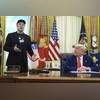 "Decoded: Why Trump's DOGE office ended 8 months ahead of schedule")


