
Ex-astronaut William Anders, who took Earthrise photo, dies in plane crash
The photograph, the first colour image of Earth from space, is one of the most important photos in modern history for the way it changed how humans viewed the planet
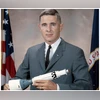 "Ex-astronaut William Anders, who took Earthrise photo, dies in plane crash")
Explore Business Standard

Associate Sponsors
Co-sponsor
The photograph, the first colour image of Earth from space, is one of the most important photos in modern history for the way it changed how humans viewed the planet
Retired Maj. Gen. William Anders, the former Apollo 8 astronaut who took the iconic Earthrise photo showing the planet as a shadowed blue marble from space in 1968, was killed Friday when the plane he was piloting alone plummeted into the waters off the San Juan Islands in Washington state. He was 90. His son, retired Air Force Lt. Col. Greg Anders, confirmed the death to The Associated Press.
The family is devastated, Greg Anders said. He was a great pilot and we will miss him terribly.
William Anders has said the photo was his most significant contribution to the space program, given the ecological philosophical impact it had, along with making sure the Apollo 8 command module and service module worked.
The photograph, the first colour image of Earth from space, is one of the most important photos in modern history for the way it changed how humans viewed the planet. The photo is credited with sparking the global environmental movement for showing how delicate and isolated Earth appeared from space.
Arizona Sen. Mark Kelly, who is also a retired NASA astronaut, wrote on the social platform X, "Bill Anders forever changed our perspective of our planet and ourselves with his famous Earthrise photo on Apollo 8. He inspired me and generations of astronauts and explorers. My thoughts are with his family and friends.
A report came in around 11.40 am that an older-model plane crashed into the water and sank near the north end of Jones Island, San Juan County Sheriff Eric Peter said.
Only the pilot was on board the Beech A45 airplane at the time, according to the Federal Aviation Association.
William Anders said in an 1997 NASA oral history interview that he didn't think the Apollo 8 mission was risk-free but there were important national, patriotic and exploration reasons for going ahead. He estimated there was about one in three chance that the crew wouldn't make it back and the same chance the mission would be a success and the same chance that the mission wouldn't start to begin with. He said he suspected Christopher Columbus sailed with worse odds.
He recounted how earth looked fragile and seemingly physically insignificant, yet was home.
We'd been going backwards and upside down, didn't really see the Earth or the Sun, and when we rolled around and came around and saw the first Earthrise, he said. That certainly was, by far, the most impressive thing. To see this very delicate, colorful orb which to me looked like a Christmas tree ornament coming up over this very stark, ugly lunar landscape really contrasted.
The National Transportation Safety Board and FAA are investigating the crash.
(Only the headline and picture of this report may have been reworked by the Business Standard staff; the rest of the content is auto-generated from a syndicated feed.)
First Published: Jun 08 2024 | 10:39 AM IST

