Human brain's cerebellum affected more than other regions from Covid: Study
In addition to being one of the few studies showing COVID-19's effects on the brain, the study said that it is the first to report diffusion abnormalities in the white matter of the cerebellum
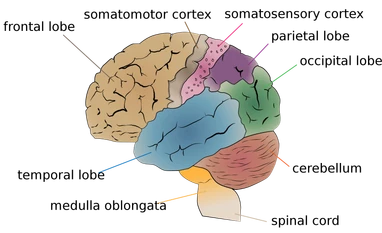
Press Trust of India New Delhi The human brain's cerebellum might be more vulnerable to Covid infections than other brain regions, a new study employing an innovated MRI technique has found.
The study from Rotman Research Institute and Sunnybrook Hospital in Toronto, Canada, reinforces the idea that Covid can lead to changes in the brain, it said.
The new imaging technique, called correlated diffusion imaging (CDI), was developed by Alexander Wong, a systems design engineering professor, University of Waterloo, Canada.
A new form of MRI, CDI can better highlight the differences in the way water molecules move in tissue by capturing and mixing MRI signals at different gradient pulse strengths and timings, the study published in the journal Human Brain Mapping said. Wong had previously developed CDI as a better imaging measure for detecting cancer.
The CDI imaging of frontal-lobe white matter (in the brain's cerebrum) revealed a less restricted diffusion of water molecules in COVID-19 patients. At the same time, it showed a more restricted diffusion of water molecules in the cerebellum of patients with COVID-19.
"Some may think COVID-19 affects just the lungs," Wong said. "What was found is that this new MRI technique that we created is very good at identifying changes to the brain due to COVID-19. COVID-19 changes the white matter in the brain."
In addition to being one of the few studies showing COVID-19's effects on the brain, the study said that it is the first to report diffusion abnormalities in the white matter of the cerebellum.
While the study was originally designed to show changes to the brain from Covid, rather than specific damage, it said that many of the potential sources of such changes link to disease and damage.
Wong suggested future tests could focus on whether COVID-19 actually damages brain tissue. Additional studies could also determine, he said, if COVID-19 can change the brain's grey matter.
"Hopefully, this research can lead to better diagnoses and treatments for COVID-19 patients," Wong said.
(Only the headline and picture of this report may have been reworked by the Business Standard staff; the rest of the content is auto-generated from a syndicated feed.)

 "Human brain's cerebellum affected more than other regions from Covid: Study")

