
India votes in favour of UNGA resolution on immediate ceasefire in Gaza
With the UNGA adopting the resolution, India welcomed "common ground" by the international community but said the challenge is to strike the right balance
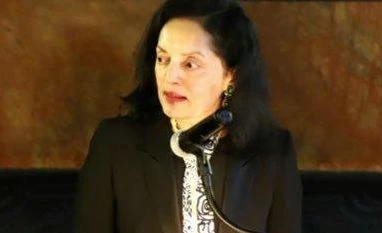 "India votes in favour of UNGA resolution on immediate ceasefire in Gaza")
Explore Business Standard
With the UNGA adopting the resolution, India welcomed "common ground" by the international community but said the challenge is to strike the right balance
India voted in favour of a UN General Assembly resolution demanding immediate humanitarian ceasefire in Gaza, a shift in New Delhi's stance about two months after it abstained on a text that had called for truce in the Israel-Hamas conflict.
"India has voted in favour of the resolution just adopted by the General Assembly, India's Permanent Representative to the UN Ruchira Kamboj said after the vote on Tuesday.
"We welcome the fact that the international community has been able to find a common ground to address the multiple challenges facing the region right now," she said.
The 193-member UN General Assembly overwhelmingly adopted the draft resolution Protection of civilians and upholding legal and humanitarian obligations' at an emergency special session, with 153 nations voting in favour, 10 against and 23 abstentions.
The resolution was adopted amid a round of applause in the General Assembly hall. Those voting against included Austria, Israel and the US while Germany, Hungary, Italy, Ukraine and the UK were among those who abstained.
With the UNGA adopting the resolution, India welcomed "common ground" by the international community but said the challenge is to strike the right balance.
"Our challenge in this extraordinarily difficult time is to strike the right balance. The gravity and complexity of what the international community faces is underlined by the Secretary General invoking Article 99 of the Charter of the United Nations, Kamboj said.
Guterres last week invoked the rare and dramatic constitutional move under the United Nations Charter to appeal to the Security Council for a humanitarian ceasefire in Gaza and to avert a "humanitarian catastrophe, which he said has potentially irreversible implications for Palestinians and for peace and security in the region.
The UNGA resolution took note of the December 6 letter by Guterres written under Article 99 of the UN Charter, the first time that he invoked the Article since he became Secretary-General in 2017. Article 99 states that the Secretary-General may bring to the attention of the Security Council any matter which in his opinion may threaten the maintenance of international peace and security.
Kamboj said that the situation that the UN General Assembly has been deliberating upon has many dimensions. There is the terrorist attack in Israel on October 7 and the concern for the hostages taken at that time. There is an enormous humanitarian crisis and the large scale loss of civilian lives, especially of women and children.
Kamboj added that there is also the issue of observing international humanitarian law in all circumstances, and there is the endeavour to find a peaceful and lasting two-state solution to the long standing Palestine question.
The resolution, introduced by Egypt, demanded an immediate humanitarian ceasefire and reiterated its demand that all parties comply with their obligations under international law, including international humanitarian law, notably with regard to the protection of civilians.
It also demanded the immediate and unconditional release of all hostages, as well as ensuring humanitarian access.
In late October, India had abstained in the General Assembly on a resolution that had called for an immediate humanitarian truce in the Israel-Hamas conflict leading to a cessation of hostilities and unhindered humanitarian access in the Gaza strip.
India's Deputy Permanent Representative to the UN Yojna Patel had said in Explanation of Vote at the time that In a world where differences and disputes should be resolved by dialogue, this august body should be deeply concerned at recourse to violence. That too, when it happens on a scale and intensity that is an affront to basic human values.
Patel had said that violence as a means to achieve political objectives damages indiscriminately and does not pave the way for any durable solutions. Describing the terror attacks in Israel on October 7 as shocking, India had said they deserve condemnation.
Terrorism is a malignancy and knows no borders, nationality or race. The world should not buy into any justification of terror acts. Let us keep aside differences, unite and adopt a zero tolerance approach to terrorism, Patel had said.
Sources had said at the time that the draft resolution in the General Assembly did not include any explicit condemnation of the terrorist attacks of October 7. They had said that in the absence of all elements of India's approach not being covered in the final text of the Resolution, Delhi had abstained in the vote on its adoption.
(Only the headline and picture of this report may have been reworked by the Business Standard staff; the rest of the content is auto-generated from a syndicated feed.)
First Published: Dec 13 2023 | 10:25 PM IST


