
Israeli strikes kill 14 in Gaza, destroy rubble-clearing equipment
A municipality in the Jabaliya area of northern Gaza said a strike on its parking garage destroyed nine bulldozers provided by Egypt and Qatar
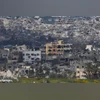 "Israeli strikes kill 14 in Gaza, destroy rubble-clearing equipment")
Explore Business Standard

Associate Sponsors
Co-sponsor
A municipality in the Jabaliya area of northern Gaza said a strike on its parking garage destroyed nine bulldozers provided by Egypt and Qatar
Israeli strikes on the Gaza Strip killed at least 14 Palestinians, mostly women and children, and destroyed bulldozers and other heavy equipment that had been supplied by mediators to clear rubble. Separate strikes on Tuesday killed two people in Lebanon.
Israel's 18-month offensive against Hamas has destroyed vast areas of Gaza, raising fears that much of it may never be rebuilt. The territory already had a shortage of heavy equipment, which is also needed to rescue people from the rubble after Israeli strikes and to clear vital roads.
A municipality in the Jabaliya area of northern Gaza said a strike on its parking garage destroyed nine bulldozers provided by Egypt and Qatar, which helped broker the ceasefire that took hold in January.
Israel ended the truce last month, renewing its bombardment and ground operations and sealing the territory's two million Palestinians off from all imports, including food, fuel and medical supplies.
The strikes also destroyed a water tanker and a mobile generator provided by aid groups, and a truck used to pump sewage, the Jabaliya al-Nazla municipality said.
There was no immediate comment from the Israeli military on the strikes. The military says it only targets militants and blames civilian deaths on Hamas because the group operates in densely populated areas.
Israeli strikes kill 14, mostly children An Israeli airstrike early Tuesday destroyed a multistory home in the southern city of Khan Younis, killing nine people, including four women and four children, according to Nasser Hospital, which received the bodies.
The dead included a 2-year-old girl and her parents.
They were asleep, sleeping in God's peace. They had nothing to do with anything, said Awad Dahliz, the slain girl's grandfather. What is the fault of this innocent child? A separate strike in the built-up Jabaliya refugee camp killed three children and their parents, according to the Gaza Health Ministry's emergency service.
Israel's air and ground war has killed over 51,000 Palestinians, mostly women and children, according to the ministry, which does not say how many of the dead were civilians or combatants. Israel says it has killed around 20,000 militants, without providing evidence.
The war began when Hamas-led militants attacked southern Israel on October 7, 2023 killing some 1,200 people, mostly civilians, and taking 251 people hostage. They are still holding 59 hostages, 24 of whom are believed to be alive, after most of the rest were released in ceasefire agreements or other deals.
Hamas has said it will only free the remaining hostages in return for the release of Palestinian prisoners, a full Israeli withdrawal and a lasting ceasefire. Israel has said it will keep fighting until the hostages are returned and Hamas has been either destroyed or disarmed and sent into exile. It has pledged to hold onto so-called security zones in Gaza indefinitely.
Islamist killed in Lebanon An Israeli drone strike southeast of Beirut killed Hussein Atwi, a member of the Lebanese branch of the Muslim Brotherhood, a regionwide Sunni Islamist political movement. The group said he was leaving for work when the drone struck.
Lebanon's Health Ministry said another person was killed in an Israeli strike on the southern Tyre province, without providing further details.
Israel has continued to carry out regular strikes across Lebanon despite reaching a ceasefire with the Hezbollah militant group in November. Israel says it is targeting militants and weapons caches. The Lebanese government says 190 people have been killed and 485 wounded since the ceasefire took hold.
Hezbollah began firing on Israel the day after Hamas' October 7 attack. Israel responded with airstrikes, and the conflict in Lebanon escalated into a full-blown war in September when Israel carried out a heavy wave of strikes and killed most of Hezbollah's top leadership.
(Only the headline and picture of this report may have been reworked by the Business Standard staff; the rest of the content is auto-generated from a syndicated feed.)
First Published: Apr 22 2025 | 5:28 PM IST

