
Nepal's Gen-Z sign 10-point deal with interim govt amid deepening rift
One of the opposing Gen-Z groups also tore the draft of the agreement that was floated to them, protesting against the deal after it was signed
 "Nepal's Gen-Z sign 10-point deal with interim govt amid deepening rift")
Explore Business Standard
One of the opposing Gen-Z groups also tore the draft of the agreement that was floated to them, protesting against the deal after it was signed
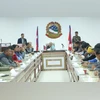
Representatives of the Gen-Z People's Movement and the Interim Government of Nepal on Wednesday evening signed a 10-point agreement amid a rising rift within the group.
The agreement was sealed at the Prime Minister's Office between the Gen-Z Movement Alliance, the Council of Gen-Z (led by Sudan Gurung), the Gen-Z Front (led by Rakshya Bom), and other splinter groups. However, the deepening rift within the Gen-Z groups surfaced during the meeting, with members objecting to the rationality of the agreement, which was made in the absence of the President.
One of the opposing Gen-Z groups also tore the draft of the agreement that was floated to them, protesting against the deal after it was signed.
The agreement includes provisions for honouring martyr families, providing relief to the injured, and forming commissions to strengthen anti-corruption efforts. The government has committed to forming a high-level commission to investigate violent incidents that occurred during the recent protests.
"The struggle has continued to date from September 8 and 9. Today we have completed a step of this struggle by reaching the agreement. I had constantly been encouraged by Gen-Z stating that following the agreement, it would be a record for history; the Gen-Z martyrs and the injured would get identification of their struggle. At other times there were conflicts in Nepal, and this would give identity, which we also had felt," Sushila Karki, the Interim Prime Minister of Nepal, said.
The agreement states that individuals who lost their lives during the Gen-Z protests of September 8 and 9 will be declared martyrs, and their families will receive relief and support.
The government will provide free medical treatment, education, employment opportunities, and social security to those injured during the movement.
A Martyrs' Memorial Foundation will be established to honour their contributions. Gen-Z leaders have welcomed this provision, calling it a step towards justice.
The agreement also includes commitments to investigate any human rights violations during the protests and ensure action against those responsible, a move that has encouraged many protest participants.
The government and the Gen-Z movement have agreed to form a high-level commission to propose improvements to Nepal's constitution. Areas of focus will include proportional representation, youth participation, and reforms in the electoral system.
Provisions such as introducing a "None of the Above" (NOTA) voting option, conducting primary elections, and setting 21 as the minimum age for candidacy are included in the agreement.
The document also emphasises ending partisan influence in state institutions and strengthening anti-corruption mechanisms. A Gen-Z Council will be established to advise the government and reinforce democratic processes in Nepal.
The Gen-Z uprising of September 8 and 9, which brought a wave of change in the Himalayan nation buffered between India and China, has left the nation looking for a safe landing through the election.
The two-day protest resulted in the deaths of at least 76 people, forcing then-communist leader KP Sharma Oli to resign from the post. An interim government was formed after the dissolution of parliament.
The post-mortem report of those killed in police firing in Kathmandu Valley states death due to bullet injuries to the head and chest. During protests, police are only allowed to fire below the knee to control the situation.
The police had also used some lethal weapons to crack down on the protestors, following which former Home Minister Ramesh Lekhak stepped down from the post. But Oli remained adamant about not resigning despite rising pressure.
With parliament already dissolved and elections called for next year in March, Nepal is traversing a bumpy road towards the hope of stability. After five days of deliberation and debate, the Himalayan nation appointed former Chief Justice Sushila Karki as the Interim Prime Minister, who recommended dissolving parliament and is mandated to conduct the election on March 5, 2026.
(Only the headline and picture of this report may have been reworked by the Business Standard staff; the rest of the content is auto-generated from a syndicated feed.)
First Published: Dec 11 2025 | 6:51 AM IST

